
Ethiopian mustard
Brassica carinata A. Braun
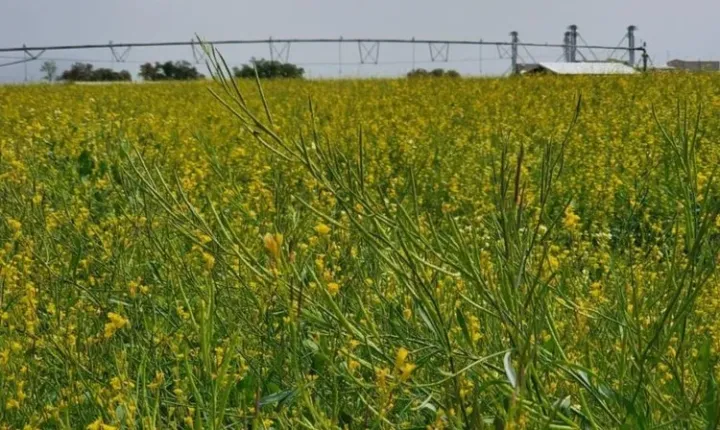
Description
Sowing dates
Ethiopian mustard, scientifically known as Brassica carinata, is an annual herbaceous plant belonging to the Brassicaceae family. Planting typically occurs in early spring once soil temperatures reach 5–8 degrees Celsius to ensure rapid and uniform seedling emergence.
In regions with temperate climates, early sowing is prioritized to establish a strong plant base before the arrival of summer heat. In specific climates, winter sowing may be an option, provided cold-tolerant varieties are selected.
The optimal seeding depth ranges from 1.5 to 2.5 cm, allowing for adequate moisture retention and physical stability. Mechanical row seeding is common, with row spacing maintained between 15 and 30 cm for efficient crop management.
Seeding rates are calculated based on the intended use; higher densities are employed for biomass production, while lower densities are used for seed production. Proper spatial isolation is essential to prevent cross-pollination with other Brassica species.
The crop displays strong germination vigor, with sprouts usually appearing within one week under suitable soil and temperature conditions, giving it a head start against potential weed pressure.
Growing requirements
The crop thrives in loamy or sandy loam soils with a neutral to slightly acidic pH level. It shows high adaptability but performs poorly in waterlogged or saline soil, which can inhibit root development and overall plant health.
Brassica carinata is renowned for its drought tolerance compared to other oilseeds. This is primarily due to its deep taproot system, which allows the plant to access subsoil moisture during periods of limited rainfall.
The ideal ambient temperature for growth ranges between 15 and 25 degrees Celsius. The crop is cold-hardy during its early vegetative stages, showing resilience to minor frost events common in spring planting schedules.
Fertilizer requirements focus on nitrogen and phosphorus, especially during the vegetative growth phase. Balanced fertilization significantly improves biomass yield and the final oil content of the harvested seeds.
High levels of solar radiation are necessary for the plant's metabolic processes and oil accumulation. Excessive shading should be avoided, as it leads to stem elongation, reduced branching, and overall decline in productivity.
Yield
Seed yields for Ethiopian mustard typically range from 2.0 to 3.5 tonnes per hectare, depending on local climate conditions, moisture availability, and fertility management. Proper agricultural practices are key to reaching these yields.
Biomass yields can reach 30–40 tonnes per hectare, making it a versatile crop for green manure, forage, and sustainable biofuel production. Its multi-purpose nature makes it an attractive choice for diversified farming systems.
The oil content in seeds varies between 35% and 45%, providing high-quality feedstock for renewable diesel and jet fuel. This high oil concentration is the primary driver for its increased commercial cultivation in recent years.
Yield potential is maximized when plant density is managed correctly, often targeting 80–120 plants per square meter. The plant's ability to produce lateral branches compensates for minor variations in stand establishment.
Monitoring during the flowering and pod-filling stages is critical. Irrigation during these phases can significantly increase seed weight and overall quality, ensuring a high-value final product.
Main diseases and pests
Crucifer flea beetles are the most significant threat to young seedlings. Effective management includes seed treatment with systemic insecticides to provide early protection and promote faster initial growth.
Fungal diseases like Alternaria leaf spot and clubroot can affect yield in humid years. Crop rotation, ensuring a minimum interval of 3–4 years between Brassica crops, is the most effective preventative measure against soil-borne pathogens.
Aphids can cause substantial damage by feeding on leaves and stems, leading to stunted growth and reduced photosynthetic capacity. Monitoring and timely application of targeted insecticides help manage these populations.
Weed competition during the seedling stage is highly detrimental to Brassica carinata. Integrated weed management, including mechanical cultivation and selective herbicide use, is standard practice to ensure canopy closure.
- Crucifer flea beetle
- Alternaria blight
- Clubroot
- Aphids
- Stem weevil
Harvesting
Harvesting should be initiated when pods are fully mature and seeds have reached a moisture level of 10–12%. At this stage, the seeds typically turn a dark brown or black color, signaling optimal maturity.
The crop possesses pods that are relatively resistant to shattering, allowing for direct combining. However, adjustments to the combine's cylinder speed and sieve settings are necessary to minimize seed crushing.
Direct combining is common in large-scale operations, but swathing is an alternative in cooler regions where uneven maturation may occur. Proper combine calibration is vital for achieving high cleaning efficiency.
Post-harvest storage requires cleaning and aeration to maintain seed quality. Seeds should be stored in cool, dry facilities to prevent heating and fungal growth, which could degrade the oil quality over time.
Avoiding harvest delays is crucial to maintain seed quality. Prolonged exposure to moisture and fluctuating temperatures after maturity can lead to reduced oil stability and potential germination losses in stored batches.