
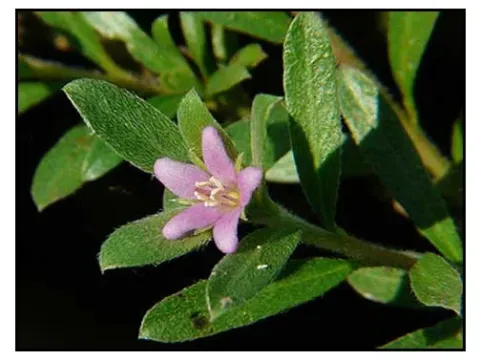
Rotula
Rotula
Rotula is a genus of perennial shrubs belonging to the Boraginaceae family. Unlike typical terrestrial plants, Rotula is recognized as a rheophyte, which means it has evolved to thrive in fast-flowing water environments such as river beds and rocky streams.
What the section contains

Rotula
The distribution range of this genus is mainly concentrated in tropical regions across India, Southeast Asia, and parts of South America. They are exclusively found in environments where water levels fluctuate and flow rates remain relatively high throughout the year.
Botanically, Rotula species exhibit structural adaptations like prostrate stems and a robust root system capable of anchoring the plant firmly to rocky substrates. These features prevent the plant from being swept away by strong currents during monsoon floods or seasonal high water.
The plant has strict environmental requirements: it needs constant access to aerated, flowing water. It cannot survive in stagnant water or waterlogged soils lacking drainage, as its root system is adapted to gaseous exchange in oxygen-rich river environments.
Regarding human use, several species, particularly Rotula aquatica, have been historically documented in traditional medicine systems. Infusions made from the plant are known for potential diuretic and lithontriptic properties, although these are rarely cultivated on a commercial agricultural scale.
The primary threats to the survival of Rotula populations include river pollution, gravel mining, and the construction of dams. These anthropogenic activities alter the natural flow and quality of water, leading to the rapid degradation of their fragile rheophytic habitats.