
Dyer's alkanet
Alkanna tinctoria Tausch
Description
Sowing dates
Sowing of dyer's alkanet is typically performed in early spring once the soil has warmed up, or in late autumn in regions with mild winters.
The seeds have a hard seed coat, making pre-sowing treatments such as stratification or soaking in warm water highly recommended for better emergence.
Seeds should be sown at a depth of 1–2 centimeters, ensuring sufficient moisture for germination, but avoiding waterlogged soil conditions.
Planting in rows with a spacing of 45–60 centimeters allows for effective weed control and maintenance, which is essential for young seedlings.
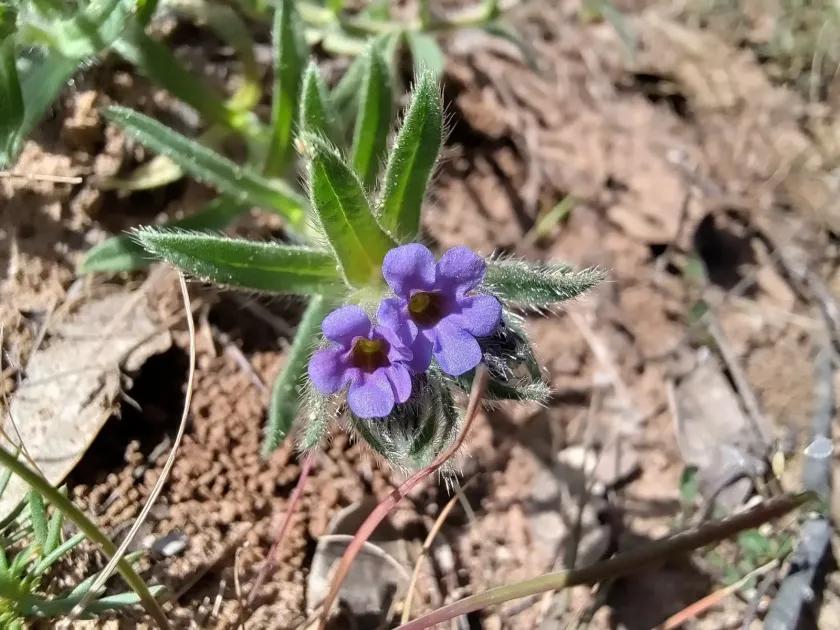
Alkanna tinctoria is a perennial herb of the Boraginaceae family, characterized by a slow initial growth rate as it invests heavily in root development.
Growing requirements
The crop thrives in sunny, well-exposed locations, which is critical for maximizing the synthesis of the red pigment in its taproots.
Well-drained, sandy or gravelly soils are ideal for alkanet, as it is highly susceptible to root rot if the soil remains excessively damp.
Being native to the Mediterranean basin, it exhibits excellent drought tolerance and is well-suited for growth in arid or semi-arid climates.
Neutral to slightly alkaline soil pH levels are optimal, as they support the development of high-quality roots rich in medicinal and dyeing properties.
The plant requires minimal fertilization but benefits from a balanced supply of calcium and magnesium to support consistent root growth.
Yield
Yields of alkanet root are dependent on the age of the crop, with the highest quality pigment concentrations usually achieved in 2 to 3-year-old plants.
Farmers can expect a variable yield of roots, typically ranging from 1 to 3 tonnes per hectare under favorable soil and climatic conditions.
Harvesting should be timed carefully to ensure the roots have reached their maximum size and pigment saturation before digging.
The economic value is primarily driven by the demand for alkanin, a potent natural red pigment used in high-end cosmetic and food applications.
Consistent agronomic management and moisture control throughout the growth cycle are the primary factors in optimizing harvestable yield.
Main diseases and pests
Fungal pathogens causing root rot are the most significant threat to alkanet, especially in soils that are not sufficiently aerated or well-drained.
Soil-dwelling pests like wireworms can cause significant damage to the root system, potentially introducing diseases through the lesions they create.
Competition from aggressive weed species can severely stunt alkanet development, requiring diligent mechanical or manual weed management strategies.
Excessive humidity or rainfall during the plant's dormancy period can increase the risk of decay, necessitating careful site selection.
Integrated pest management, including crop rotation and field monitoring, is the most effective approach to preventing large-scale crop failures.
Harvesting
Harvesting takes place during the autumn months when the plant has finished its annual growth cycle and the nutrient flow to the roots is complete.
The roots are carefully extracted using specialized equipment that lifts the soil to minimize breakage, as the value lies in the integrity of the root material.
Once harvested, the roots are thoroughly cleaned of dirt and debris to ensure the final product meets purity standards for industrial processing.
Controlled drying at moderate temperatures is essential to stabilize the pigment and prevent the degradation of the active chemical compounds.
Storage should be in cool, dark, and dry conditions to prevent moisture uptake and ensure long-term stability of the alkanet's dyeing properties.