
Batrachospermum
Batrachospermum
Batrachospermum is a genus of freshwater red algae (Rhodophyta) belonging to the family Batrachospermaceae. Unlike the vast majority of red algae species that inhabit marine environments, this genus has successfully evolved to colonize freshwater habitats.
What the section contains
Batrachospermum
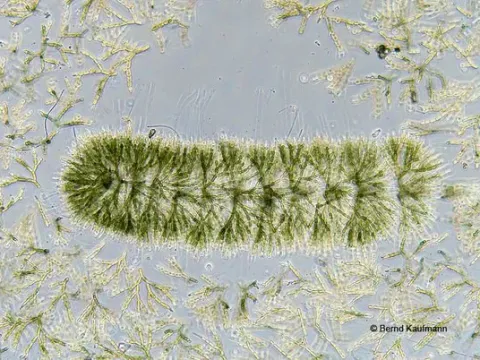
The organism consists of a macroscopic thallus, which is composed of branched filaments with a whorled arrangement of branches. Visually, the algae appear as slimy, gelatinous cords, with colors ranging from olive-green to blue-green or reddish, depending on the light conditions.
The plant is highly sensitive to water quality and serves as a natural bioindicator. It requires flowing, clean, oxygen-rich water with low mineral content for optimal development. Pollution of water bodies with organic matter is lethal to these colonies.
The distribution range is global, covering most continents. The species thrives in cold springs, fast-flowing streams, and clear mountain brooks. The ideal temperature range for the development of the thallus is between 5 and 18 degrees Celsius.
The biology of the algae involves a complex life cycle, featuring a microscopic stage known as the "Chantransia" phase, which resembles filamentous green algae. From this stage, the mature macroscopic plant eventually develops through reproductive cycles.
The primary threats to Batrachospermum populations are anthropogenic, particularly the eutrophication of water bodies. Excess nitrogen and phosphorus levels lead to the competitive displacement of this species by more aggressive blue-green or filamentous green algae.