
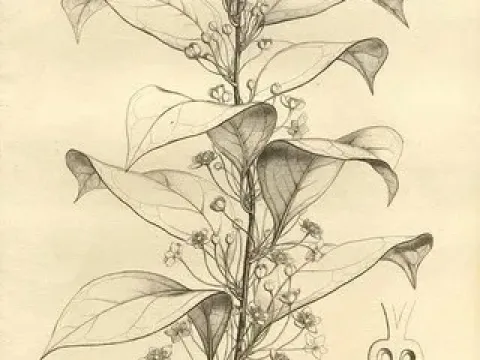
Barbeuia
Barbeuia
Barbeuia (lat. Barbeuia) is a monotypic genus of flowering plants classified within the distinct family Barbeuiaceae. In its natural habitat, it is represented by a single species, Barbeuia madagascariensis, which is an endemic plant native to the island of Madagascar.
What the section contains

Barbeuia
Botanically, this crop is a woody vine capable of reaching significant sizes in its natural environment. The plant is characterized by simple, alternate leaves and small flowers arranged in raceme-like inflorescences, which eventually develop into capsule-type fruits.
Proper development of Barbeuia requires specific tropical conditions characteristic of the moist forests of Madagascar. The plant prefers well-drained, fertile soils rich in organic matter and cannot tolerate waterlogging in the root zone.
The optimal temperature range for this crop is between +22 and +28 degrees Celsius, while maintaining consistently high humidity levels. The plant is sensitive to sudden temperature fluctuations and direct midday sunlight, preferring filtered or diffused light conditions.
From an agricultural and economic perspective, Barbeuia is currently not a mass-produced crop. Its utility is largely restricted to scientific research, botanical collections, and potential applications in tropical landscape design.