
Ziziphus mauritiana
Ziziphus mauritiana Lam.
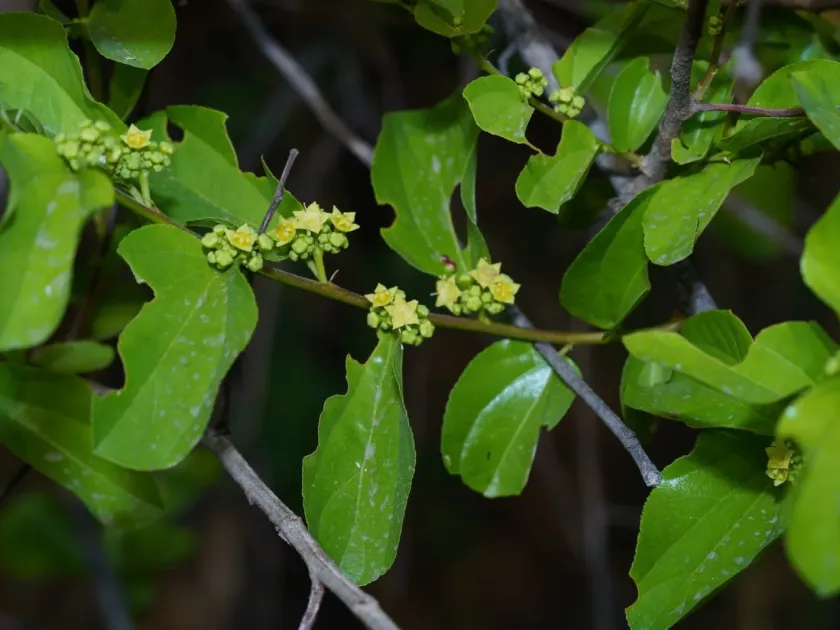
Description
Growing requirements
Ziziphus mauritiana, commonly known as the Indian jujube or Ber, is an evergreen or semi-deciduous fruit tree belonging to the Rhamnaceae family. It typically grows into a medium-sized tree with a spreading crown and thorny, flexible branches.
Originating from South Asia, this species is now widely distributed throughout the tropical and subtropical regions of Africa, Southeast Asia, and Australia. It is highly valued for its resilience in harsh climates and difficult soil conditions.
The tree thrives in full sunlight and prefers well-drained soils, showing a remarkable ability to survive in both saline and alkaline environments. It is an ideal crop for arid and semi-arid regions where other fruit trees fail to grow.
Climatically, Ziziphus mauritiana favors temperatures ranging from 20 to 35 degrees Celsius. While it is adapted to tropical heat, it exhibits a certain degree of cold tolerance, although frost can cause significant damage to young shoots and leaves.
Cultivation practices involve regular pruning to manage the canopy size and encourage fruit production. Pruning also helps in maintaining the tree's health by ensuring adequate light penetration and air circulation throughout the foliage.
Yield
Yield capacity is a major advantage of this crop, with mature trees producing between 50 to 150 kilograms of fruit annually. Productivity is heavily influenced by cultivar selection and orchard management intensity.
The trees are precocious, often starting to bear fruit within 2–3 years of planting. This early maturation allows farmers to achieve a return on investment significantly faster compared to many other perennial tree crops.
The fruits are highly nutritious, containing essential vitamins like vitamin C and B-complex, as well as minerals. They are consumed fresh, dried, or processed into various products like pickles, preserves, and confectioneries.
Beyond its edible fruits, the plant provides high-quality, durable timber used in construction and small-scale manufacturing. Additionally, the leaves are utilized in animal husbandry as fodder for livestock.
Proper spacing is crucial in commercial orchards to prevent overcrowding, which would otherwise lead to decreased yields and increased competition for essential nutrients and soil moisture.
Main diseases and pests
The most significant threat to Ziziphus mauritiana production is the fruit fly, which can cause severe losses by infesting ripening fruits. Rigorous monitoring and timely intervention are necessary to protect the harvest.
Lepidopteran larvae are another major concern, as they feed on the leaves and can cause extensive defoliation, particularly in young plants that are not yet established in the orchard environment.
Powdery mildew is a common fungal disease that affects the leaves and fruits, especially in areas with high humidity. Good orchard sanitation and adequate tree spacing are key preventive strategies.
Root rot, often caused by poor drainage and waterlogging, can lead to sudden plant death. Ensuring that the orchard site is well-drained is the most effective way to prevent this soil-borne issue.
An integrated pest management (IPM) approach is highly recommended, combining biological control agents with selective use of eco-friendly pesticides to maintain plant health while ensuring fruit safety for consumption.
Harvesting
Harvesting Ziziphus mauritiana is typically a labor-intensive process, as fruit ripening is asynchronous across the canopy. Fruits are usually picked by hand to ensure they are harvested at the peak of their maturity.
Freshly harvested fruit has a relatively short shelf life at ambient temperatures. Therefore, rapid post-harvest handling and immediate storage or processing are vital to minimize loss and maintain market value.
Mechanical harvesting techniques, such as shaking branches, are used in some large-scale commercial operations, though this method often results in a higher proportion of bruised fruit that must be sorted immediately.
Proper sorting based on size and degree of maturity is essential for meeting export or retail quality standards. Uniformly packed fruit fetches a significantly higher price in domestic and international markets.
The harvesting season requires careful management of labor, as it often coincides with rapid ripening cycles. Implementing a staggered harvesting schedule helps in managing supply chain logistics and reducing wastage.