
Christ's thorn jujube
Ziziphus spina-christi (L.) Desf.
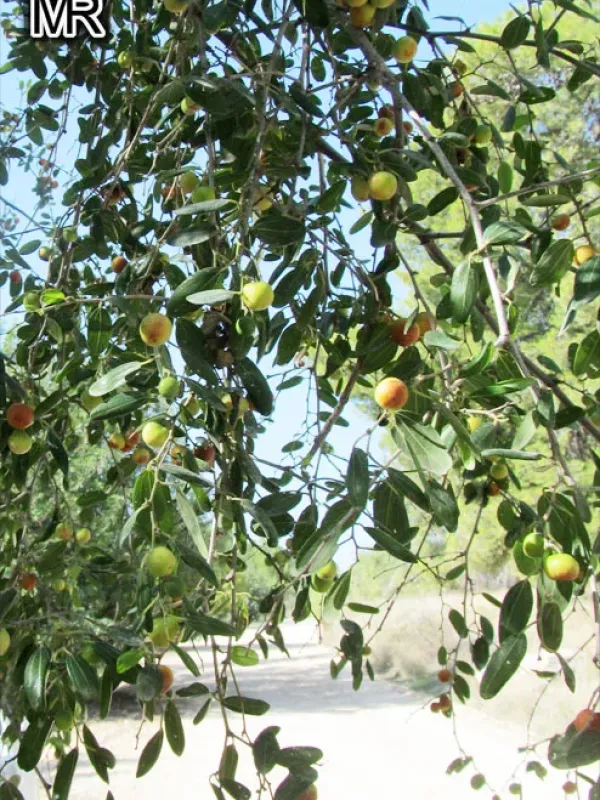
Description
Growing requirements
Christ's thorn jujube (Ziziphus spina-christi) is a member of the Rhamnaceae family. It is a drought-resistant evergreen or deciduous shrub or tree that can grow up to 8 meters in height. Its branches are known for their sharp, paired spines, which serve as an effective defense mechanism in arid environments.
Native to North and Tropical Africa and Western Asia, this species is well-adapted to hot, dry climates. It exhibits remarkable physiological resilience, surviving in areas where temperatures regularly exceed 40°C and rainfall is minimal, making it an excellent candidate for sustainable agriculture in arid regions.
The plant thrives in full sun and requires significant light exposure for optimal biomass and fruit production. While it is highly tolerant of poor, saline, or sandy soils, it prefers well-drained loamy soils to prevent root asphyxiation during the rare but heavy rains typical of its native range.
Agronomic management involves structural pruning to maintain an open canopy and improve fruit accessibility. Although extremely drought-tolerant once established, young trees benefit from irrigation during the first two years of growth to develop a deep and robust root system.
Beyond its culinary utility, Ziziphus spina-christi is widely used for creating dense, thorny living fences. Its deep root system also provides essential soil stabilization in desert ecosystems, effectively mitigating erosion and contributing to the restoration of degraded landscapes.
Main diseases and pests
The species is generally recognized for its robust health and low susceptibility to pests. However, in poorly ventilated environments or areas with higher humidity, the plant can fall victim to powdery mildew, which manifests as a whitish coating on the leaves and young shoots.
Insect pests are limited but can include spider mites during prolonged dry and hot periods. These mites feed on leaf sap, causing chlorosis and premature leaf drop, which can weaken young plants if left uncontrolled throughout the growing season.
Fruit infestation by certain fly species can occur, which may damage the crop quality. Proper garden sanitation, including the prompt removal of fallen fruit, is the primary method for interrupting the life cycle of these pests and maintaining a healthy orchard environment.
Preventative cultural practices, such as maintaining correct spacing between trees and avoiding excessive water accumulation at the base, are essential for disease prevention. Maintaining good air circulation is the most effective way to manage fungal risks in high-density plantings.
Monitoring the plant during the flowering and fruit-setting phases is critical for early detection of potential threats. When intervention is required, the focus should remain on integrated pest management practices to protect the tree's overall vigor and yield potential.