
Russian boxthorn
Lycium ruthenicum Murray
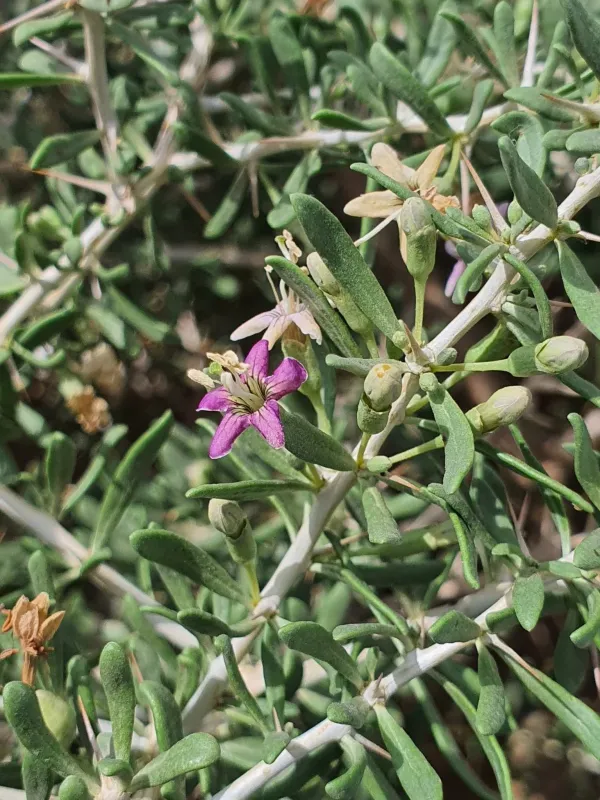
Description
Growing requirements
Russian boxthorn (Lycium ruthenicum) is a deciduous shrub belonging to the Solanaceae family. Often referred to as black goji berry, it is highly valued for its dark, antioxidant-rich fruit that thrives in challenging environmental conditions.
The native habitat of this species spans arid and semi-arid regions of Eurasia, including parts of China and Central Asia. This distribution reflects its evolutionary adaptation to harsh weather, including high temperatures and prolonged drought.
The plant performs best in well-drained, sandy, or alkaline soils where many other crops would fail. It has an exceptional tolerance to salinity, which enables its cultivation on degraded or saline agricultural land.
With an extensive root system, Russian boxthorn is highly efficient at water uptake. This physiological trait allows it to survive in arid zones, making it an excellent candidate for desert reclamation and landscape stabilization.
The berries are the primary economic product, increasingly popular in the nutraceutical industry. Beyond fruit production, the plant serves as a vital component in erosion control and establishing windbreaks in dry environments.
Main diseases and pests
Pest pressure on Lycium ruthenicum is generally low, though aphids may occasionally colonize tender new growth. Integrated pest management, focusing on beneficial insects, is the preferred strategy for control.
Powdery mildew is the most common fungal disease, typically occurring in areas with stagnant air or high humidity. Promoting airflow through proper plant spacing is the most effective cultural control method.
Waterlogging is a significant threat that leads to root rot and eventual plant failure. Careful site selection, prioritizing locations with excellent natural or artificial drainage, is essential for healthy growth.
Regular pruning is a fundamental practice to maintain plant vigor and minimize the spread of potential pathogens within the canopy. Removing dead or diseased wood annually reduces the risk of long-term infection.
Ongoing monitoring is recommended to catch pest infestations at early stages. By maintaining optimal spacing and avoiding over-irrigation, farmers can prevent most common health issues affecting the crop.