
Lycium truncatum
Lycium truncatum Y. C. Wang
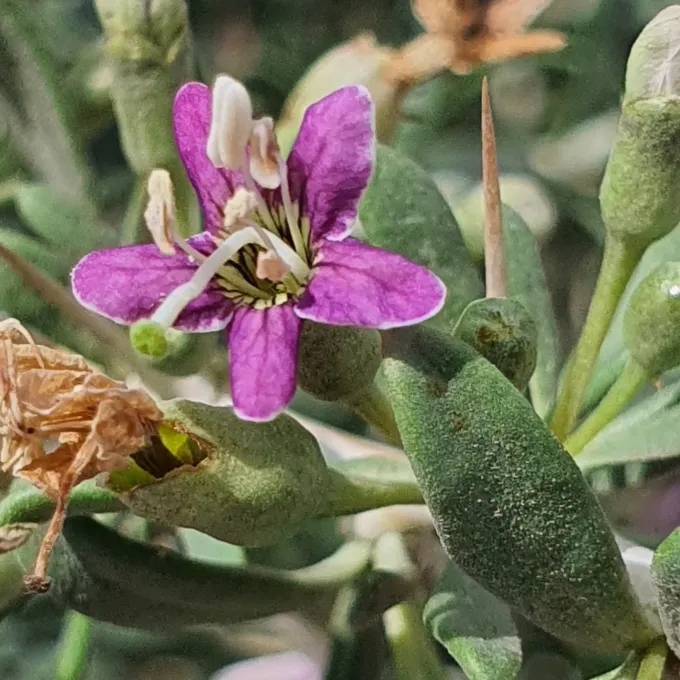
Description
Growing requirements
Lycium truncatum is a shrub species belonging to the Solanaceae family, closely related to the well-known goji berry. Native to the arid regions of China, this plant has evolved to withstand extreme environmental conditions, making it a robust candidate for cultivation in challenging climates.
The species is known for its high tolerance to drought, salinity, and alkaline soils. These characteristics make it an excellent choice for stabilizing soil in desert-prone areas and for reclaiming degraded lands where other agricultural crops struggle to survive.
For optimal growth, Lycium truncatum requires full sunlight exposure. While the plant can survive in nutrient-poor soils, a well-draining substrate is critical to prevent root rot. It thrives in loose, sandy-loam environments that facilitate deep root penetration.
Agronomic management includes maintaining a regular pruning schedule to manage the plant's natural tendency to spread. Pruning improves air circulation within the canopy, which is a vital practice for preventing disease outbreaks and ensuring uniform light distribution to the berries.
Temperature range tolerance is broad, as the species is accustomed to significant diurnal variations. Although it is drought-hardy, supplemental irrigation during the peak flowering and fruit-setting stages can significantly enhance berry yield and quality in commercial settings.
Yield
The primary economic output of Lycium truncatum is its berries, which are highly valued for their nutritional profile. They contain significant concentrations of antioxidants, vitamins, and minerals, serving as an important raw material for the health food and pharmaceutical industries.
Beyond the berries, the plant possesses medicinal properties in its bark and leaves. Extracts derived from these parts are being researched for their anti-inflammatory and immunomodulatory effects, contributing to the crop's diverse commercial value.
Yield efficiency is significantly improved through the adoption of selective breeding programs. Current agricultural trends focus on developing varieties that exhibit lower thorn density, which makes manual and mechanical harvesting safer and more efficient for growers.
Post-harvest handling is critical to preserve the berry's bioactive compounds. Proper drying techniques and temperature-controlled storage ensure that the product maintains its shelf life and quality for export markets and food processing facilities.
The long-term yield is dependent on maintaining soil fertility through organic inputs. The plant's ability to fix nutrients in its roots and its resilience to diseases makes it a low-input, high-potential crop for sustainable agriculture development.
Main diseases and pests
The plant is susceptible to common solanaceous pests, such as aphids, spider mites, and leaf-feeding beetles. These pests primarily target young foliage, potentially stunting growth if left untreated during the early stages of the growing season.
Powdery mildew represents the most significant fungal threat, especially in areas with high humidity or poor canopy ventilation. Fungal infections can quickly reduce the leaf area index, directly impacting the plant's ability to produce sugars for fruit development.
Integrated Pest Management (IPM) is the recommended approach for controlling threats. This involves monitoring pest populations, encouraging natural predators, and applying targeted organic treatments that protect the plant without compromising the quality of the berries.
Sanitation is a cornerstone of disease control. Removing fallen leaves and infected branches from the field limits the overwintering capacity of fungal spores and helps to break the life cycle of insect pests that reside in plant debris.
Regular scouting and early intervention are essential for successful cultivation. By identifying stressors early, farmers can apply corrective actions—such as pruning or localized treatments—preventing the need for broad-spectrum chemical interventions.