
Fig-leaf gourd
Cucurbita ficifolia Bouché
Description
Sowing dates
The fig-leaf gourd (Cucurbita ficifolia) is a perennial member of the Cucurbitaceae family, though it is typically grown as an annual in temperate agricultural zones.
Seed sowing should be timed carefully, as the plant is highly sensitive to frost; starting seedlings indoors 3–4 weeks before the last frost date is standard practice.
Direct seeding into the garden can occur only once soil temperatures consistently stay above 15°C, ensuring the roots establish rapidly in warm soil conditions.
The plant exhibits vigorous, rapid growth, with vines capable of reaching 10–15 meters, necessitating substantial spacing between individual mounds or planting holes.
Prior to planting, soaking seeds in lukewarm water for several hours can significantly improve germination rates and encourage robust early seedling development.
Growing requirements
This species thrives in loose, well-draining, and nutrient-rich soils, preferring a neutral or slightly acidic pH for optimal uptake of micronutrients.
The fig-leaf gourd requires full sun exposure; while it is remarkably hardy and adaptive, shaded conditions will drastically reduce fruit production and vine vigor.
A distinctive botanical feature is its ability to produce adventitious roots at vine nodes, which helps the plant sustain itself and provides extra moisture absorption.
Regular irrigation is essential during the flowering and fruit-set stages, although the plant shows better drought tolerance once fully established than many other cucurbits.
Proper airflow is required to prevent humidity-related issues, especially when the massive vines cover significant portions of the garden bed.
Yield
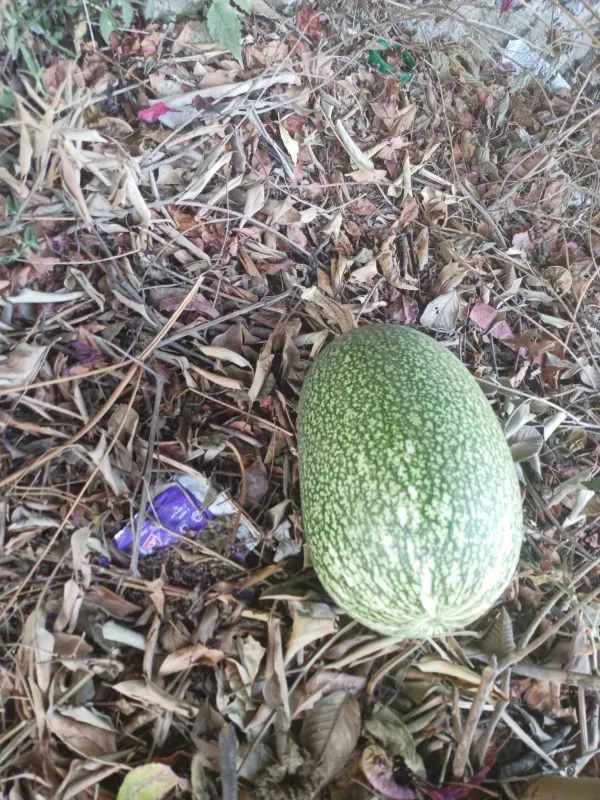
The fruit is characterized by a tough, dark green rind with white mottled patterns, protecting a fibrous white flesh that is mild and slightly sweet.
It is widely utilized in confectionery, specifically for making artisanal preserves, jams, and candied fruits due to its unique texture and long shelf life.
The fig-leaf gourd is globally recognized in professional agriculture as a superior rootstock for grafting cucumbers, melons, and watermelons to combat soil-borne diseases.
Mature fruits can remain shelf-stable for up to two years in cool, dry conditions, making them a reliable food source throughout off-seasons.
Beyond human consumption, the plant serves as a high-quality forage crop, with both leaves and fruit residues being highly palatable to livestock.
Main diseases and pests
This plant is highly valued for its natural genetic resistance to several devastating cucurbit diseases, including Fusarium wilt and various forms of root rot.
While resistant, the leaves may occasionally suffer from powdery mildew if humidity is consistently high and air circulation is insufficient within the dense canopy.
Pests like aphids or spider mites may occasionally infest the foliage, particularly during extreme heat waves, requiring standard integrated pest management.
Slugs and snails can pose a threat to young seedlings, making protective measures like copper tape or physical barriers useful during the first few weeks.
Crop rotation remains a recommended practice despite the gourd's high resilience, as it maintains soil health and reduces the overall buildup of minor pests.
Harvesting
The harvest season culminates when the fruit peduncle (stalk) becomes woody, dry, and beige, indicating that the fruit has reached physiological maturity.
It is crucial to complete the harvest before the first autumn frost, as the fruit structure is vulnerable to freezing damage, which destroys the rind integrity.
Care should be taken to keep a portion of the stem attached to the fruit during cutting, as this acts as a seal against infection and rot during storage.
After picking, cured fruits should be kept in a well-ventilated, dry area to ensure the rind hardens fully, which is essential for extended preservation.
Long-term storage is best achieved in cool environments away from direct sunlight, allowing for continuous supply for both commercial and culinary uses.