
Stubble turnip
Brassica napus L. subsp. napus var. pabularia (DC.) Alef.
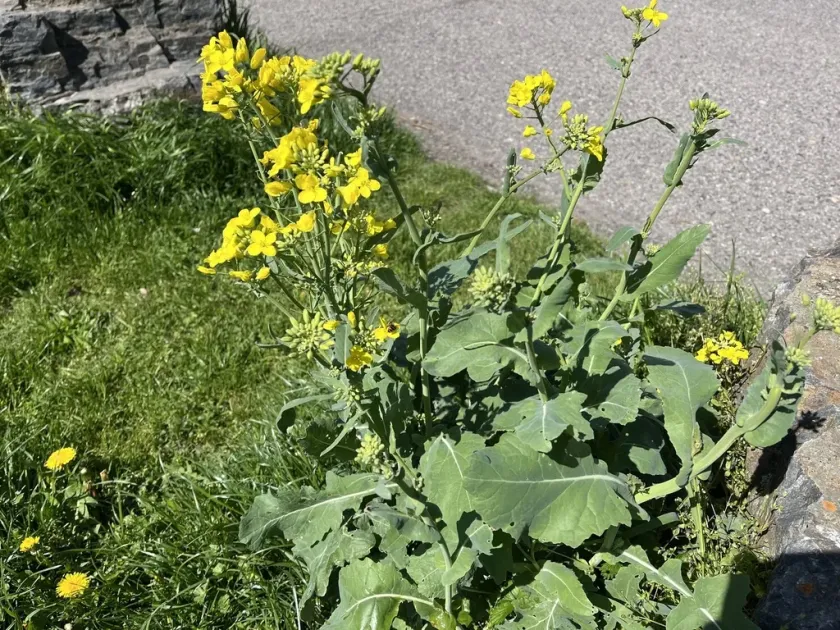
Description
Sowing dates
Stubble turnip (Brassica napus L. subsp. napus var. pabularia) is a highly productive biennial forage crop belonging to the Brassicaceae family. It is widely grown for its fleshy roots and leafy tops, which provide excellent nutritional value for cattle and sheep during autumn and winter grazing.
The sowing period for stubble turnip is flexible, allowing farmers to fit it into diverse cropping rotations. Typically, it is sown from late spring to mid-summer, depending on the intended harvest time and regional climatic conditions in the specific farming zone.
When sown as a catch crop after the harvest of primary cereals, stubble turnip establishes rapidly, making it a popular choice for intensive farming systems. Its fast growth cycle ensures that the biomass is ready for grazing within 8 to 12 weeks after sowing.
The crop is usually drilled into a firm, fine seedbed to ensure good seed-to-soil contact. Row spacing is typically maintained at 45–60 cm, though broadcasting is sometimes practiced in specific grazing scenarios where intensive root development is not the primary target.
Sowing depth should be kept shallow, between 1.5 and 2.5 cm. Proper moisture management during the germination phase is essential, as the seeds are small and require consistent contact with soil moisture to initiate uniform emergence across the field.
Growing requirements
Stubble turnip thrives in a wide range of soil types, including loams and sandy loams, provided they are well-drained. The crop is sensitive to soil compaction, so deep tillage or subsoiling prior to sowing is recommended to allow for optimal root penetration and development.
Water availability is the most critical factor for high yields. While the crop can tolerate brief dry spells, consistent rainfall or irrigation significantly improves biomass production and quality. Water stress during the root expansion stage will severely limit the total yield.
Temperature requirements are moderate; the crop prefers cool, temperate conditions for optimal photosynthesis. It is remarkably frost-tolerant, meaning that the roots can remain in the field during the onset of winter without significant damage, facilitating extended grazing periods.
Fertilizer application should be based on soil testing, with a focus on nitrogen, phosphorus, and potassium. Nitrogen application promotes rapid leaf development, while phosphorus and potassium are essential for root quality and storage potential in the soil.
Crop rotation is vital to prevent the build-up of soil-borne pests and diseases, particularly those affecting Brassicaceae species. A minimum rotation interval of three to four years is standard practice to maintain field health and minimize the risk of clubroot.
Yield
The yield of stubble turnip is remarkably high, often producing between 40 and 80 tonnes of fresh matter per hectare. Yields are highly dependent on the choice of cultivar, soil fertility levels, and the overall management of water and weed control.
The nutritional profile of stubble turnip is excellent, characterized by high levels of digestible energy and sugars. This makes it an ideal feed supplement for dairy cows and finishing lambs, particularly when pasture growth starts to decline in the late season.
Effective weed management in the early stages of growth is essential to protect the crop from competition. Once the canopy closes, the fast-growing foliage of the turnip effectively suppresses most weeds, reducing the need for late-season herbicides.
The density of the stand plays a significant role in determining root size. Lower sowing rates result in larger, heavier roots, while higher densities produce a higher proportion of leafy forage, which is often preferred for specific grazing regimes.
Ultimately, the efficiency of stubble turnip as a forage crop lies in its ability to convert solar energy into highly palatable feed at a low cost, significantly reducing the reliance on stored winter fodder and concentrates.
Main diseases and pests
Pests represent a major challenge in turnip production. Flea beetles can cause severe damage to cotyledons and young leaves immediately after emergence, often requiring rapid intervention with approved insecticides or the use of seed treatments.
The cabbage root fly is another significant pest whose larvae feed on the roots, causing stunted growth and opening the plant up to secondary rot infections. Preventive measures include proper crop rotation and the avoidance of high-risk fields where the fly is endemic.
Diseases such as clubroot and downy mildew can be devastating. Clubroot, in particular, causes distorted root growth and plant death, and since the spores can persist in the soil for many years, strict adherence to rotation cycles is the best control measure.
Effective monitoring and scouting of fields during the critical early growth phases are essential to identify threats before they reach an economic threshold. Using disease-resistant varieties is a cornerstone of integrated pest management for this crop.
- Flea beetles
- Cabbage root fly
- Clubroot (Plasmodiophora brassicae)
- Downy mildew (Peronospora parasitica)
- Soft rot (Bacterial)
Harvesting
Harvesting strategies vary depending on the end use. In many cases, stubble turnips are grazed directly by livestock in the field. This "in-situ" harvesting eliminates the costs of lifting, transporting, and storing the crop, providing a significant economic advantage.
If mechanical harvesting is required for winter storage, it should be completed before deep winter freezes. The roots must be lifted carefully to avoid mechanical damage, which significantly increases the risk of decay and fungal contamination during storage.
For stored crops, roots should be topped and cleaned of excess soil before being placed in well-ventilated, frost-free environments. Maintaining a temperature just above freezing and high humidity helps preserve the crispness and nutritional content of the roots.
For grazing operations, electric fencing is often used to allocate the crop in sections, minimizing waste and ensuring that animals have a consistent daily intake. This strip grazing method ensures that both the roots and the palatable foliage are consumed efficiently.
Proper planning of the harvest sequence allows farmers to extend the grazing season into the early months of the year, significantly reducing the pressure on permanent pastures and improving the overall sustainability of the farm business.