
Thunberg's chives
Allium thunbergii G. Don
Description
Sowing dates
Sowing Allium thunbergii seeds is most successful when performed in the autumn, allowing the seeds to undergo natural winter stratification. Seeds should be placed in shallow furrows, no deeper than 2 centimeters, and covered with a light layer of soil to ensure proper contact and moisture retention.
For spring sowing, cold stratification is essential. Seeds must be kept in a refrigerator for at least 8 weeks at low temperatures to break dormancy and ensure uniform germination once they are moved to the soil.
Vegetative propagation via bulb division is the preferred method for home gardeners. This is best accomplished in early spring or immediately after the flowering period concludes, when the plant enters a dormant phase.
When dividing clusters, ensure each segment has a healthy root system and at least two to three mature bulbs. This promotes quicker establishment and ensures the plants have sufficient energy to bloom in the following season.
Consistency in watering during the initial growth phase is critical. While the plant is drought-tolerant once established, young seedlings must never be allowed to dry out completely during their first year.
Growing requirements
Thunberg's chives (Allium thunbergii) belong to the Amaryllidaceae family and are native to East Asian regions, including Japan and Korea. They are esteemed as an ornamental species, specifically noted for their late-season blooms that brighten the garden when many other perennials have faded.
This species thrives in well-drained, sandy, or loamy soil types. It is highly intolerant of waterlogged conditions, which can lead to bulb rot; therefore, selecting a site with excellent natural drainage is paramount to long-term success.
The plant is highly adaptable to various climatic zones and demonstrates significant hardiness against cold temperatures. It prefers full sun exposure to maintain its compact habit and produce vibrant flower stalks, though it can tolerate light shade in warmer climates.
Minimal fertilization is required for this plant. An overabundance of nitrogen will promote excessive foliage growth at the expense of floral production and may weaken the bulbs, making them more susceptible to disease.
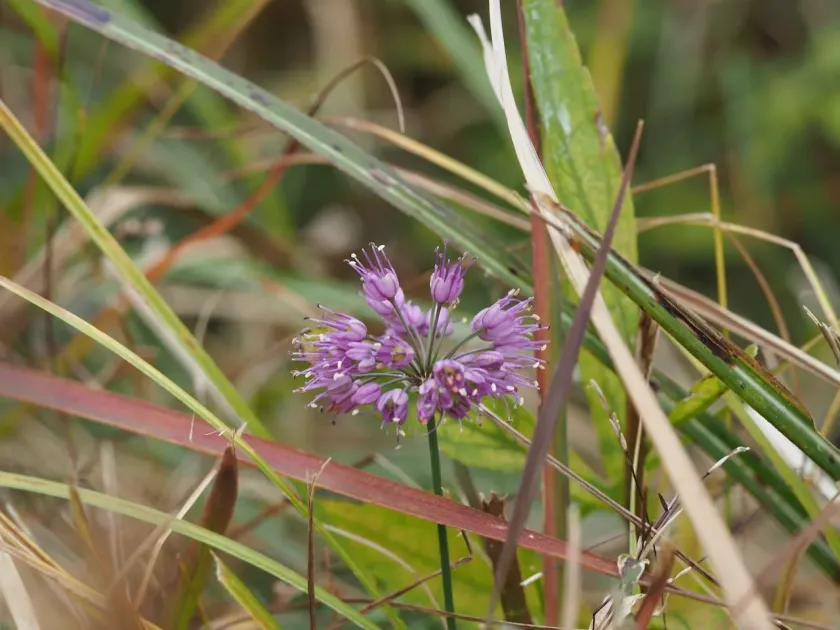
The visual characteristics include slender, grass-like leaves and attractive purplish-pink umbels. It is a low-maintenance perennial that fits perfectly in rock gardens, borders, and naturalistic landscape designs.
Main diseases and pests
The onion fly (Delia antiqua) is the most significant insect pest for this species. Larvae feed on the bulbs, leading to yellowing of the leaves and sudden collapse of the plant; crop rotation and soil treatments are effective deterrents.
Fungal pathogens such as downy mildew and gray mold frequently occur during periods of high humidity. Improving airflow around the plant canopy and avoiding overhead irrigation can significantly reduce the risk of these diseases.
Onion rust, characterized by small, reddish-brown pustules on the foliage, can become an issue in late summer. Fungicidal sprays containing copper are effective if the infection is caught early, combined with removing infected foliage.
Root-knot nematodes can also be problematic in certain soils, stunting growth and reducing flower quality. Incorporating organic matter into the soil helps build healthy ecosystems that suppress these soil-borne pests.
Sanitation practices, such as removing dead foliage at the end of the season, are essential to prevent overwintering of pathogens and pests within the garden bed, ensuring a healthy start for the following year.