
Pskem onion
Allium pskemense B. Fedtsch.
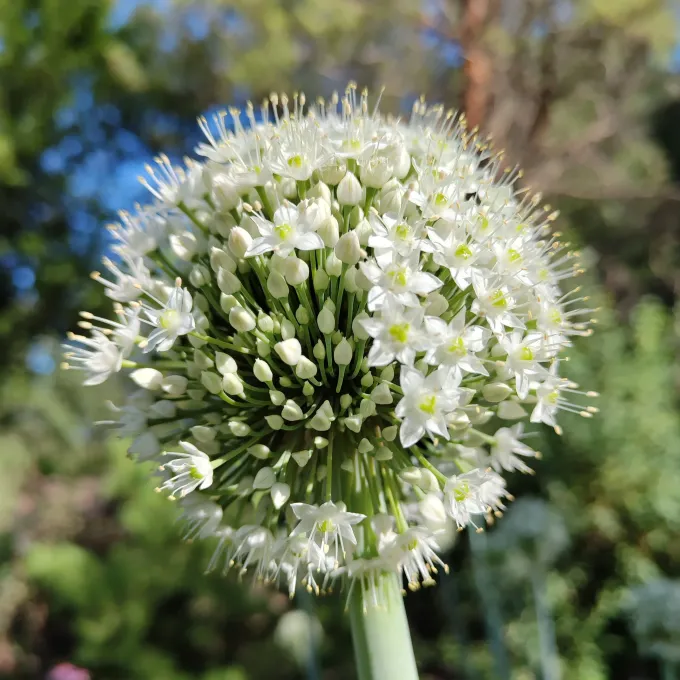
Description
Sowing dates
The Pskem onion is a perennial herbaceous plant that, in its natural habitat, propagates primarily through seeds or vegetative division of the onion clusters.
For cultivation purposes, it is recommended to sow seeds in late autumn or early spring, as the seeds require stratification to ensure uniform and high-quality germination.
Seeds should be sown at a depth of 1–2 centimeters, ensuring constant soil moisture, as young seedlings are extremely sensitive to the drying out of the topsoil layer.
An optimal planting scheme involves spacing rows about 30–40 centimeters apart, providing enough room for the development of both the root system and the foliage.
During the first year, growth is typically slow, with the plant forming a small bulb and a small set of leaves, which requires vigilant weeding to prevent competition from weeds.
Growing requirements
This species belongs to the Amaryllidaceae family and originates from the Tian Shan mountains, which defines its specific adaptation to high-altitude environments.
It prefers well-drained, fertile loamy or sandy soils with a neutral or slightly alkaline pH and does not tolerate waterlogging or marshy conditions.
The plant is highly light-loving, necessitating open, well-lit locations that are protected from harsh winds but remain well-ventilated for optimal health.
The Pskem onion possesses remarkable cold hardiness, characteristic of alpine plants, allowing it to successfully survive severe winters in various climates.
While the plant needs moderate watering during the summer, excessive moisture during its dormant phase can lead to bulb rot, making water management critical.
Yield
The yield of Pskem onion in cultivation depends on the agricultural background and the age of the plantation, reaching peak productivity by the third or fourth year.
The primary use of the crop is the consumption of its succulent leaves, which are rich in Vitamin C, phytoncides, and essential minerals, offering a sharp, pungent taste.
The bulbs of this species are notably large and dense, making them suitable for long-term storage and use in various culinary applications as a seasoning vegetable.
With proper fertilization and consistent care, the yield of green mass can reach 2–3 kilograms per square meter, depending on planting density and soil quality.
The plant's high regenerative ability allows for multiple leaf harvests throughout the growing season, provided the plant receives adequate nutrition and moisture.
Main diseases and pests
The main threats to the Pskem onion in cultivated settings include fungal diseases such as downy mildew and fusarium, which thrive when humidity is poorly managed.
Common onion pests, including the onion fly and weevils, can significantly damage young plants during the spring growth phase, necessitating proactive monitoring.
Strict adherence to crop rotation is essential, preventing the return of onion species to the same plot for at least 4–5 years to avoid soil-borne pathogens.
Biological control methods, such as seed treatments with beneficial microbes, are highly recommended to ensure the production of environmentally friendly produce.
- Prevention of basal rot.
- Effective weed management.
- Control of soil moisture levels.
Harvesting
Harvesting of green leaves can be done throughout the growing season once the leaves reach a height of 15–20 centimeters, ensuring a steady supply of fresh produce.
The harvest of the bulbs should be carried out after the foliage has fully withered, when the outer scales become dense and take on their characteristic coloration.
Once lifted, the bulbs must be cured in a shaded, well-ventilated area for several days to prevent spoilage and the development of diseases during storage.
Great care must be taken to avoid damaging the outer skins of the bulbs during the harvest, as any physical trauma reduces the shelf life of the final product.
Stored produce should be kept in cool, dry areas with temperatures ranging from 0 to +5 degrees Celsius, with periodic inspections to remove any damaged bulbs.