
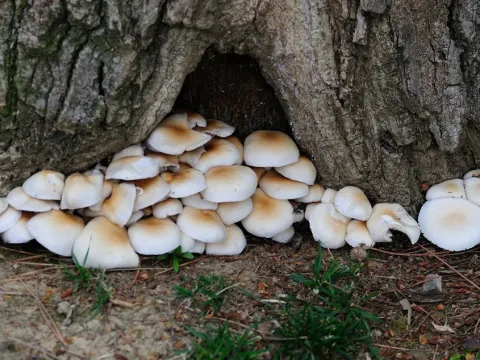
Agrocybe cylindracea
Agrocybe cylindracea (Fr.) Gill.
Agrocybe cylindracea, widely known as the Pioppino mushroom, is a prized xylotrophic fungus belonging to the Strophariaceae family. Cultivation is carried out year-round in controlled indoor environments.
What the section contains
Agrocybe cylindracea
The process begins with the inoculation of a prepared substrate, usually composed of hardwood sawdust, straw, or other cellulosic agricultural by-products, with high-quality grain spawn.
During the incubation phase, which lasts 3 to 5 weeks, the mycelium colonizes the substrate. Maintaining absolute sterility during inoculation is vital to prevent contamination by competing fungi.
The environment for incubation must be dark with a stable temperature to ensure the uniform development of the mycelial network throughout the block.
Successful cultivation relies on high-quality inoculum, as the growth speed and final yield are directly proportional to the vigor of the initial mycelium culture.
For optimal growth, the relative humidity should be maintained between 85% and 90%. Temperature requirements vary, with 18–24°C ideal for vegetative growth and 15–18°C for fruiting.
The substrate should have a pH between 6.0 and 6.5. Adding nitrogen-rich supplements like wheat bran is common to increase yield, but must be managed carefully to avoid mold growth.
Adequate ventilation is essential to maintain low CO2 levels, as high concentrations lead to elongated, distorted stalks and reduced cap development in the Pioppino variety.
While this mushroom does not require high light intensity, ambient light is necessary to ensure the mushrooms develop their natural, healthy coloration.
Water quality is equally important; chlorinated water should be avoided or treated to ensure that the mycelium is not damaged by chemicals during the hydration of the blocks.
The average yield of Agrocybe cylindracea is approximately 20–25% of the wet substrate weight. High-performing farms can achieve consistent outputs through strict environmental control.
The mushrooms are harvested in multiple flushes, typically up to four cycles. The first two flushes usually provide the highest quality and volume of fruiting bodies.
After each flush, the blocks require a short recovery period where humidity is strictly monitored to encourage the next round of mushroom development.
Yield stability is heavily influenced by the nutrient density of the substrate and the precision with which the grower manages the humidity-to-temperature ratio.
Professional growers often use automated climate control systems to ensure that the yield remains consistent despite external seasonal temperature fluctuations.
The most significant threats to Pioppino cultivation are green molds like Trichoderma, which thrive in high-humidity conditions and can quickly overwhelm substrate blocks.
Fungus gnats and phorid flies are common insect pests that can damage the mycelium and contaminate the crops, necessitating the use of fine-mesh filters on ventilation systems.
Bacterial blotch may occur if the caps remain wet for extended periods, leading to dark spots and tissue degradation, significantly reducing marketability.
Mites can also pose a problem if sanitation standards are not strictly met, potentially causing stunted growth or total failure of the fruiting body formation.
Preventative measures include regular sanitation of the growing area and strict adherence to sterilization protocols for all growth media to keep the facility clean.
Harvesting should occur just before the caps begin to flatten and release spores. Harvesting at this stage ensures the best flavor, texture, and shelf life for the product.
Pioppino mushrooms are typically harvested by cutting or twisting the entire cluster from the base of the block, keeping the mushrooms clean and ready for market packaging.
Immediately after harvest, mushrooms should be cooled to 2–4°C to preserve their firm texture, which is a hallmark of this species compared to other cultivated varieties.
Shelf life under refrigeration is generally 5 to 7 days, meaning that rapid logistics and storage solutions are key to maintaining quality from farm to consumer.
Spent mushroom substrate can be recycled as organic compost, provided it has been verified as free of diseases and pests before application to agricultural lands.