
Pioppino mushroom
Agrocybe aegerita (V. Brig.) Singer
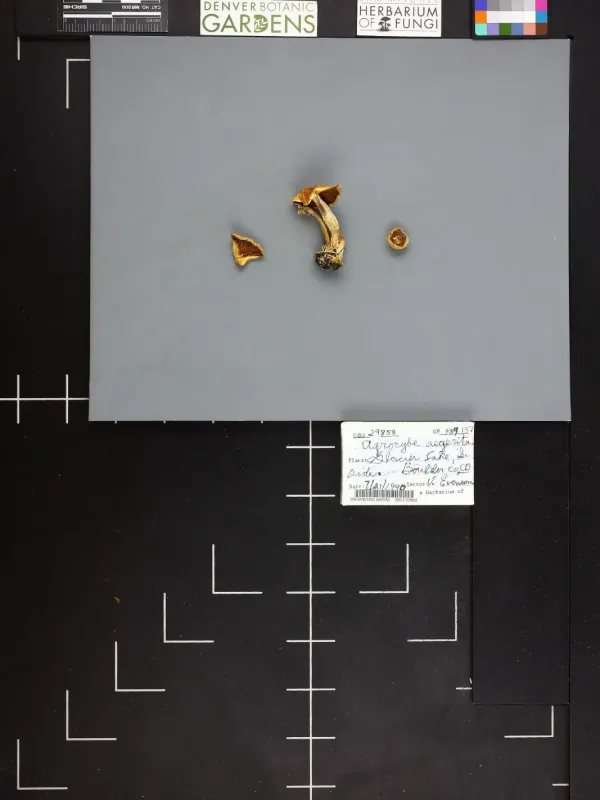
Description
Sowing dates
Inoculation of Pioppino mushrooms onto wood-based substrates can be performed year-round if a controlled climate is maintained in the production facility.
For extensive methods using logs or stumps of deciduous trees like poplar or willow, spring is the optimal time for inoculation to allow for rapid mycelial growth.
Intensive farming relies on sterilized substrate blocks composed of sawdust, straw, or grain husks, often supplemented with nitrogen sources for better yield.
The incubation phase, where the mycelium colonizes the substrate completely, requires temperatures between 22 and 25 degrees Celsius and lasts 30 to 45 days.
Sourcing high-quality grain spawn is essential, as the presence of contaminants at the start of the process will inevitably lead to total block failure.
Growing requirements
Pioppino mushrooms (Agrocybe aegerita) belong to the Strophariaceae family and are classified as wood-decaying fungi, preferring hardwood species.
To ensure successful fruiting, relative humidity levels must be strictly kept between 85% and 90% in the fruiting chamber.
Temperature control is vital; the optimal range for developing healthy, high-quality fruit bodies is between 16 and 20 degrees Celsius.
Consistent lighting is required during the fruiting phase, with 8 to 10 hours of indirect light per day to prevent the development of malformed caps.
Proper ventilation is necessary to maintain oxygen levels and keep carbon dioxide concentrations low, preventing the elongation of mushroom stems.
Yield
Yield expectations for Pioppino mushrooms under intensive conditions typically range from 15% to 25% of the substrate's wet weight.
This crop is generally harvested in two or three successive flushes, with the first flush usually providing the largest share of the total harvest.
Biological efficiency can reach up to 30% when the substrate is perfectly balanced, pasteurized correctly, and maintained with proper humidity.
Managing the moisture levels of the substrate, targeting around 65%, is the most effective way to maximize output throughout the production cycle.
Monitoring the condition of the substrate blocks after each harvest flush is essential for adjusting future watering and climate strategies.
Main diseases and pests
The most common pests affecting this species are fungus gnats (sciarids) and phorids, which can damage the primordia and ruin the mushroom appearance.
Diseases such as Trichoderma (green mold) or various bacterial blights are major risks, usually caused by improper substrate preparation or excessive moisture.
Preventative measures include regular sanitation of the facility, strict hygiene protocols during inoculation, and monitoring air quality for mold spores.
If contamination is spotted early, it is recommended to isolate or discard affected blocks to prevent the spread of pathogens throughout the grow room.
- Strict temperature control.
- Use of filtered air in ventilation.
- Regular cleaning of surfaces.
Harvesting
Harvesting should occur when the caps are 3 to 7 cm in diameter but still partially curved downwards, preventing premature spore release.
Wait until the mushrooms reach the target size, but avoid over-maturation, as fully opened caps lose flavor and have a significantly shorter shelf life.
Mushrooms are best harvested by cutting them at the base of the cluster, taking care not to disturb the underlying substrate block surface.
After each flush, the surface of the block should be cleaned of any remaining stem tissue and rehydrated to prepare for the subsequent production cycle.
Immediately cooling the harvested mushrooms to 2–4 degrees Celsius is critical for maintaining freshness and quality during storage and distribution.