
Hoary elm
Ulmus canescens
Description
Growing requirements
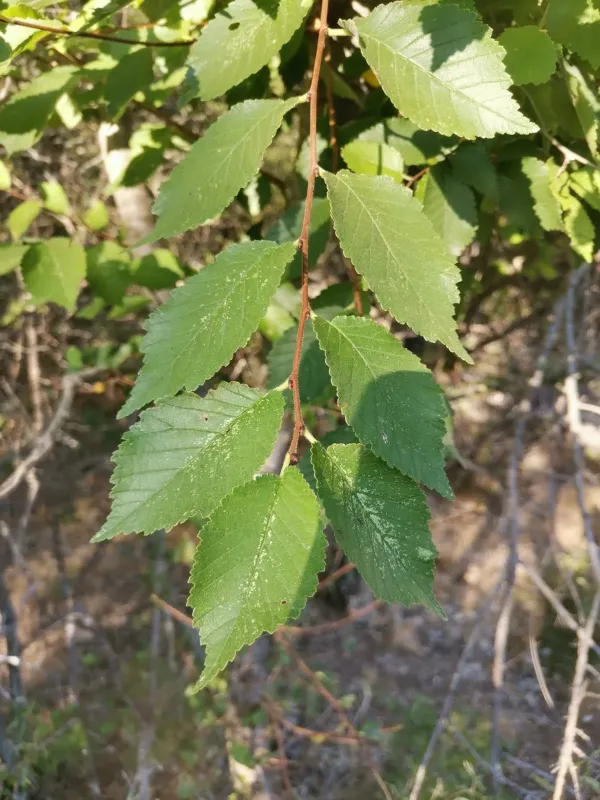
The Hoary elm (Ulmus canescens) is a deciduous tree species belonging to the Ulmaceae family. It is primarily identified by the dense, grayish pubescence on the underside of its leaves, which gives the species its distinctive common and botanical name.
This tree is native to the Mediterranean region, with a range spanning across the eastern Mediterranean coast, including parts of Greece, Turkey, and the Levant. It typically thrives in riparian zones, alluvial plains, and humid lowlands where the water table remains accessible throughout the growing season.
Morphologically, Ulmus canescens develops into a robust tree with a broad, spreading crown. Its root system is exceptionally strong, adapted to stabilizing riverbanks and participating in riparian ecosystem development, which makes it a preferred choice for environmental restoration projects.
The species requires well-drained but consistently moist soil to achieve its full growth potential. While it exhibits tolerance to moderate salinity, it performs best in deep, fertile soils rich in organic matter, where it can develop a deep taproot to sustain itself during dry summer months.
Agricultural and arboricultural management involves providing adequate space for root expansion and ensuring the trees are not subjected to severe, prolonged frost, which can damage juvenile branches. Once established, the species is relatively low-maintenance and highly resilient to local climatic conditions.
Main diseases and pests
The most significant threat to the Hoary elm is Dutch Elm Disease (DED), caused by the fungus Ophiostoma ulmi. The disease is primarily transmitted by elm bark beetles, leading to vascular wilt that can be fatal to mature trees if not detected and treated early.
Pest management should also focus on controlling defoliating insects, such as elm leaf beetles, which can significantly weaken the tree's photosynthetic capacity. Integrated pest management strategies, including the use of systemic insecticides and pheromone traps, are standard practices in nurseries.
Sanitation is a critical component of disease control; all dead or heavily infested wood must be removed and properly disposed of to prevent the spread of fungal spores and beetle populations. Regular inspections of the canopy and bark are recommended for any professional forest management program.
From a utility perspective, the timber of the Hoary elm is highly valued for its durability and resistance to rot in moist environments. It is frequently used in traditional carpentry, furniture making, and even the construction of small hydraulic structures due to its toughness.
Strategic planting practices, such as maintaining optimal density and ensuring genetic diversity, can help mitigate the impact of pests and diseases. By following these best practices, managers can maintain healthy stands of Hoary elm for both environmental and commercial purposes.