
Antiaris
Antiaris
Antiaris is a prominent genus within the Moraceae family, comprising massive evergreen trees that can reach heights of up to 40 meters in their natural tropical habitat.
What the section contains

Antiaris
The native range of Antiaris covers the tropical regions of Africa, Asia, and parts of Australia, where the trees thrive in high-humidity rainforest environments.
Climate requirements for this culture are strictly tropical; it requires year-round warmth and consistent moisture levels to support its rapid biomass accumulation.
Soil preferences lean towards deep, well-drained, and nutrient-rich lands. The tree does not tolerate waterlogging, which is a critical factor for plantation planning.
General agrotechnical practices focus on providing enough vertical space for the canopy and protecting seedlings from competitive weeds during their early development stages.
The primary economic value of Antiaris lies in its timber, which is widely utilized in the manufacturing of plywood, cabinetry, and light construction components.
The inner bark of the tree is a significant source of bast fiber, traditionally harvested to produce durable textiles, mats, and cordage for local subsistence markets.
Latex harvested from the tree contains potent cardiac glycosides. Historically used as arrow poison, modern handling requires stringent safety protocols during extraction.
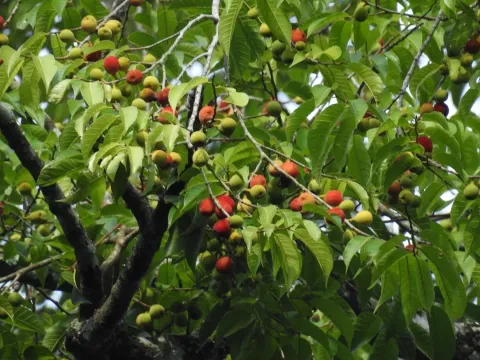
The fruit of the tree provides a food source for diverse tropical wildlife, playing a role in forest ecology, though it is not a standard crop for human consumption.
Harvesting strategies involve long-term rotation cycles, ensuring that the trees reach optimal maturity to yield high-quality timber and fiber products for industrial use.