
Abyssinian persimmon
Diospyros abyssinica
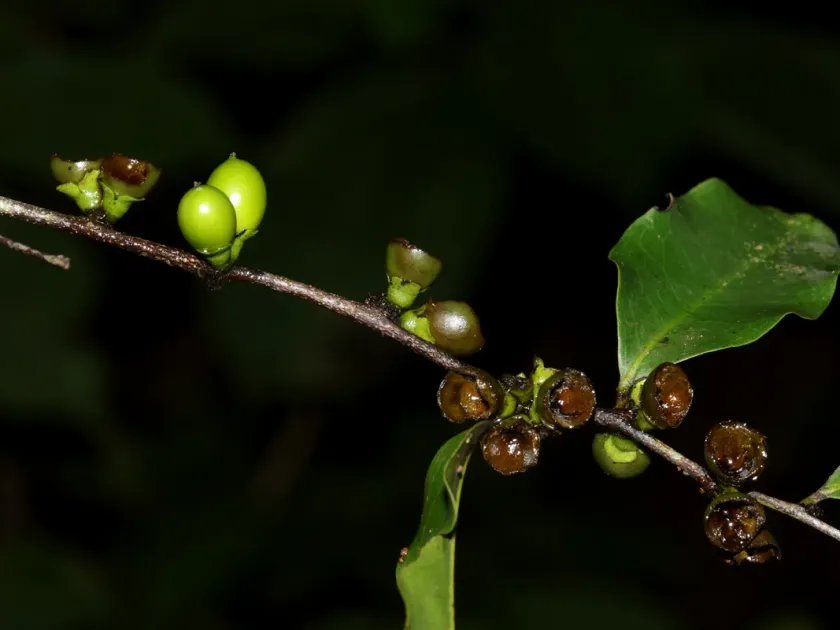
Description
Growing requirements
The Abyssinian persimmon (Diospyros abyssinica) is a significant species belonging to the Ebenaceae family. This tree is primarily known for its structural strength and its role in the diverse ecosystems of the African continent, ranging from forests to wooded savannahs.
Geographically, it is found throughout much of tropical Africa. It typically thrives in regions with moderate to high rainfall and well-drained, nutrient-rich soils. The tree is capable of adapting to various elevations, though it prefers stable tropical temperatures.
Regarding cultivation requirements, the species necessitates full exposure to sunlight for optimal development. Young saplings require consistent moisture and protection from direct, scorching winds to ensure steady growth and proper root establishment in the soil.
Agricultural management involves regular pruning to maintain a central leader and healthy crown structure. Soil fertility should be managed through organic amendments, ensuring the plant has access to micronutrients essential for the development of its dense, high-quality wood.
The primary economic use of this plant is centered on its timber. The wood is dense, durable, and highly valued for furniture making, wood carving, and decorative carpentry, making it a sustainable choice for forestry projects in suitable tropical climates.
Main diseases and pests
Wood-boring insects represent the most significant threat to the Abyssinian persimmon. These pests tunnel into the trunk and branches, compromising the structural integrity of the timber and providing entry points for various secondary pathogens.
Leaf spot diseases, often caused by fungal pathogens in humid environments, can affect the tree's health during the rainy season. These infections lead to premature defoliation, which stunts growth and reduces the overall vigor of the plant.
Root rot caused by stagnant water or poor drainage is a lethal threat to the species. This condition is particularly problematic in nursery settings, where soil aeration is critical for preventing the development of anaerobic conditions that favor root-damaging fungi.
Scale insects and mealybugs can infest the canopy, causing damage by feeding on sap and excreting honeydew. This often leads to the growth of sooty mold, which further blocks light absorption and disrupts the essential photosynthetic process of the tree.
To mitigate these risks, integrated pest management practices should be followed. This includes maintaining proper spacing to ensure adequate airflow between trees, which minimizes humidity-related fungal risks and hinders the rapid spread of insect populations.