
Tutcher persimmon
Diospyros tutcheri
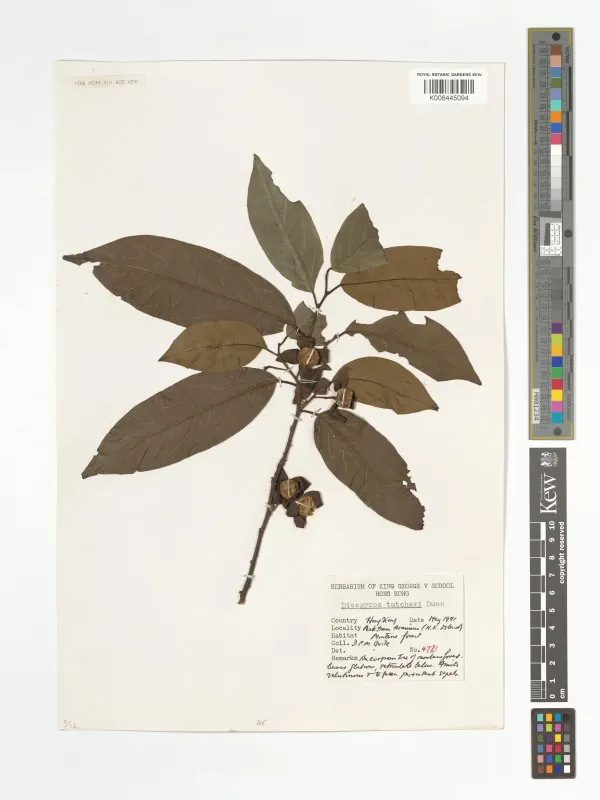
Description
Growing requirements
Tutcher persimmon (Diospyros tutcheri) is a perennial evergreen tree belonging to the Ebenaceae family. Native to the subtropical regions of Southern China, this species thrives in humid forest environments where temperatures remain relatively stable throughout the year.
The plant demands a warm climate and is highly sensitive to frost, necessitating greenhouse conditions in temperate regions. It prefers bright, filtered light and should be shielded from intense, direct sunlight, which can scorch its leaves.
Cultivation requires well-draining, nutrient-rich soil with a slightly acidic to neutral pH. Proper soil structure is essential, as the roots are prone to damage if the planting medium becomes waterlogged or overly compacted.
Agricultural management involves consistent irrigation practices and maintaining optimal humidity levels. Fertilization during the active growing season helps support the development of healthy foliage and sturdy branches.
From a botanical standpoint, this species is valuable for its taxonomic significance within the Diospyros genus. It is mainly used in academic collections and ornamental horticulture due to its evergreen nature and attractive tree structure.
Main diseases and pests
The primary threats to Tutcher persimmon include fungal pathogens triggered by high humidity and poor air circulation. Powdery mildew and leaf spot diseases are common concerns, especially in confined greenhouse environments.
Insect pests, such as scale insects and mealybugs, represent a significant danger. These pests attach themselves to the stems and undersides of leaves, extracting nutrients and potentially introducing secondary viral infections.
Integrated pest management strategies are recommended, including the use of horticultural oils and systemic insecticides. Regular pruning is also vital to remove dead wood and open the canopy for better air movement.
Preventing root rot is critical for the long-term survival of the tree. This is achieved by ensuring that the potting mix or soil site provides excellent drainage and by avoiding over-irrigation during winter months.
Monitoring the plant for signs of spider mites is equally important in dry, indoor conditions. If an infestation occurs, prompt treatment with miticides is required to prevent widespread leaf drop and tree decline.