
Maingay persimmon
Diospyros maingayi
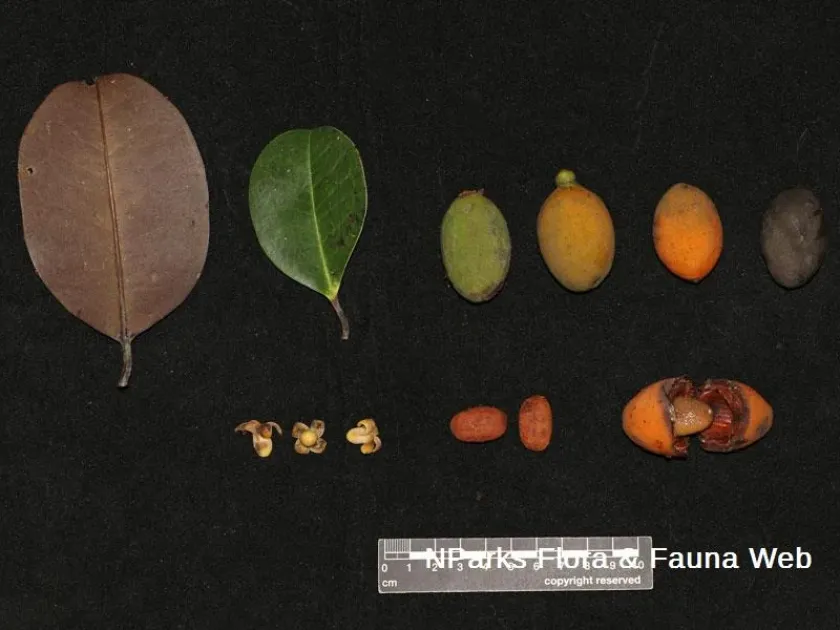
Description
Growing requirements
Maingay persimmon (Diospyros maingayi) belongs to the Ebenaceae family and is native to the tropical forests of Southeast Asia. It is an evergreen tree adapted to high-humidity environments and consistent warm temperatures throughout the year.
The tree thrives in fertile, well-drained soils that are rich in organic matter. Unlike temperate persimmon varieties, this species does not possess dormancy periods associated with cold winters and requires a stable, frost-free climate to maintain its vitality.
Adequate moisture is essential for this species. In cultivation, it requires consistent watering schedules and high air humidity to mimic the conditions of its natural habitat. It prefers bright, filtered sunlight rather than harsh, direct midday exposure, especially in younger stages.
Agricultural practices for this culture involve heavy mulching to maintain soil moisture and regular application of balanced organic fertilizers to support its steady growth. The tree grows relatively slowly, making early weed management around the base crucial for survival.
In terms of economic utility, Diospyros maingayi is appreciated for its hard, dense wood characteristic of the genus and its edible fruits. While not a major commercial crop, it is a significant species in local agroforestry systems within its native range.
Main diseases and pests
Fungal pathogens represent the primary threat to the health of Maingay persimmon, particularly in high-humidity environments where poor air circulation occurs. Root rot is a common issue if drainage is not managed correctly.
Pests such as scale insects and mealybugs frequently colonize the foliage and branches. These insects sap the plant's vitality and, if left untreated, can lead to secondary infections and stunted growth throughout the vegetation season.
Soil-borne nematodes are another concern, particularly in areas where the soil structure is not optimal. These microscopic pests attack the root system, inhibiting nutrient uptake and making the tree susceptible to drought stress or disease.
Regular sanitation of the canopy is recommended to prevent the buildup of pest populations. Pruning away dense or damaged branches allows for better airflow, which is a fundamental practice for controlling humidity-related fungal outbreaks.
Integrated pest management strategies are advised, focusing on biological controls whenever possible to protect the tree without disrupting its surrounding environment. Keeping the plant properly nourished enhances its natural resilience against typical tropical pests and diseases.