
Japanese persimmon
Diospyros japonica
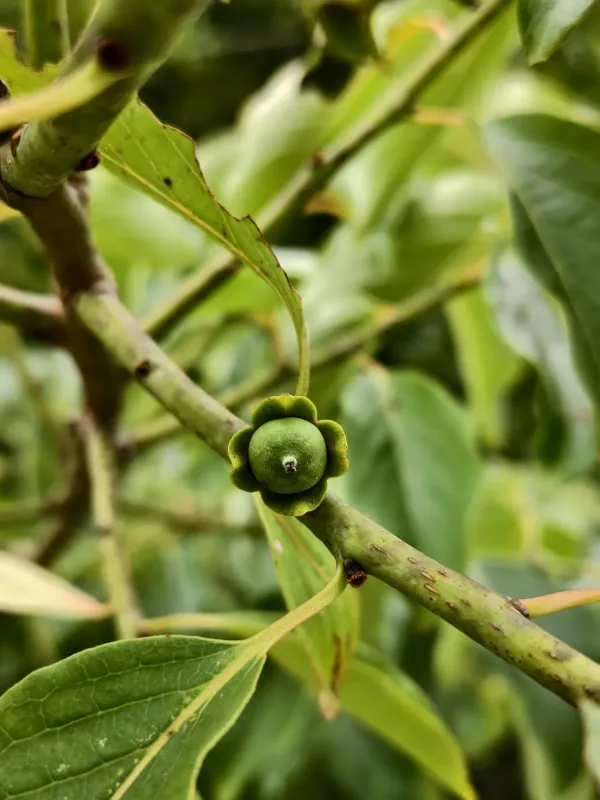
Description
Growing requirements
Japanese persimmon (Diospyros kaki) belongs to the Ebenaceae family. It is a perennial deciduous tree, reaching heights of 5–10 meters in cultivation, characterized by a deep root system and a wide, spreading canopy.
The culture originates from the subtropical regions of East Asia, including China, Japan, and Korea. Today, it is successfully grown in regions with mild climates, generally preferring areas free from extreme winter temperatures that can damage young shoots.
The tree has high light requirements: full sunlight is essential for optimal fruit development and to prevent fruit drop. Insufficient light exposure often leads to poor sugar accumulation and reduced overall yield.
Soil preferences include well-drained loams or sandy soils with a neutral or slightly acidic pH. Persimmons struggle in waterlogged conditions, making it critical to avoid low-lying areas where stagnant water can compromise the root system.
The ideal temperature for active growth ranges from 20–28°C. Although cold-hardy varieties have been developed, the tree usually requires protection against temperatures dropping below -15°C, especially during the first few years after planting.
Yield
The yield of a Japanese persimmon depends on the variety, age of the tree, and adherence to agronomic practices. On average, a mature tree in its prime can produce between 50 to 150 kilograms of fruit per season.
Regular formative pruning is crucial for increasing productivity. Removing crowded or inward-growing branches allows sunlight to reach the inner canopy, where the majority of fruit buds are formed.
Fruit bearing typically begins 3 to 5 years after planting, with peak productivity occurring between 10 and 20 years of age. Proper thinning of fruit helps prevent biennial bearing and ensures larger fruit size.
Commercial and home use includes fresh consumption, drying, and processing into jams or fruit leather. High tannin content in unripe fruit requires post-harvest ripening to achieve the characteristic sweet flavor.
Varieties are categorized into pollination-constant (sweet regardless of seed presence) and pollination-variant, which require specific fermentation techniques to remove astringency before consumption.
Main diseases and pests
Common pests affecting persimmons include scale insects and mealybugs, which weaken the tree by feeding on leaves and young shoots. Systemic insecticides applied in early spring are effective for population control.
Fungal diseases, such as gray mold and leaf spots, often occur when air circulation is poor and humidity levels are excessive. Timely sanitary pruning and the removal of fallen leaves are essential for disease prevention.
Bacterial blight can affect weakened trees, causing damage to the bark and branches. Using disease-resistant rootstocks is a highly recommended strategy for minimizing the risks of viral and bacterial infections in orchards.
Soil-borne pests, such as white grubs, can damage the root system. Proper soil management, including regular weeding and the use of organic mulch, helps mitigate these threats and keeps the tree healthy.
- Periodic application of copper-based fungicides.
- Controlled irrigation to prevent root rot issues.
- Regular inspection of the bark for cracks and infestations.
Harvesting
Harvesting Japanese persimmon requires a gentle touch as the fruits are prone to bruising. It is optimal to pick the fruit at the technical maturity stage, when they have reached the characteristic color and size but remain firm.
The harvest process is performed manually using pruning shears, leaving a small portion of the stem attached. This practice helps extend the shelf life of the fruit during storage in home conditions or specialized cold rooms.
Once harvested, firm fruits can ripen over several weeks. If acceleration of the ripening process is needed, they are placed in an environment with high ethylene concentrations to break down the tannins.
Early harvest before frost is essential, as even minor freezing can cause tissue breakdown, leading to rapid decay once the fruit thaws. Properly stored fruit can remain in good condition until December or January.
Grading the fruit by size and maturity level before distribution is a vital step that ensures a professional aesthetic and enhances the market competitiveness of the harvest.