
Hybrid persimmon
Diospyros hybrids
Description
Growing requirements
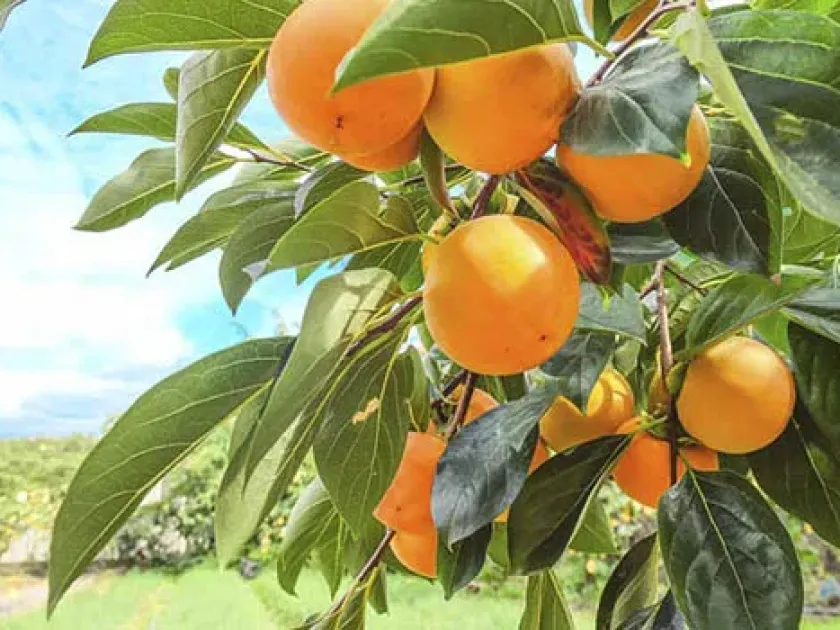
Hybrid persimmon is a result of cross-breeding between Oriental persimmon (Diospyros kaki) and American persimmon (Diospyros virginiana), belonging to the Ebenaceae family. The primary objective of such hybridization is to combine the large fruit size and excellent culinary qualities of the oriental species with the cold hardiness and robustness of the American species.
These hybrid trees exhibit significant frost tolerance, capable of surviving temperatures as low as -25°C to -28°C. This unique characteristic significantly expands the cultivation range into temperate zones where the traditional oriental persimmon would fail to survive without heavy protection during harsh winters.
The optimal site for hybrid persimmon cultivation should be sunny and protected from strong, freezing winds. Proper site selection is vital for the successful ripening of annual shoots, which directly affects the tree's ability to undergo winter dormancy and set fruit buds for the following season.
Regarding soil requirements, these trees prefer fertile, well-drained loams with a slightly acidic to neutral pH (6.0–7.0). They are highly sensitive to waterlogged conditions; therefore, in areas with heavy clay soils, it is essential to implement an effective drainage system to prevent root rot.
The main agricultural use for hybrid persimmons is the production of dessert-quality fruit. Through selective breeding, many modern hybrids have been developed to lose their astringency naturally as they ripen, making them highly desirable for fresh market consumption, as well as for commercial fruit processing.
Main diseases and pests
Despite their increased resilience, hybrid persimmons can be susceptible to fungal diseases such as leaf spot and grey mold, particularly in humid and stagnant air conditions. Maintaining an open canopy structure through proper pruning is recommended to ensure adequate air circulation and reduce pathogen spread.
Pest management focuses primarily on scale insects, which can drain sap from the bark and leaves, potentially causing stunted growth. Furthermore, monitoring for fruit moth larvae is essential during the growing season. Integrated pest management (IPM) practices, including early detection and targeted treatments, are highly recommended for maintaining tree health and crop yield.