
Southern persimmon
Diospyros australis
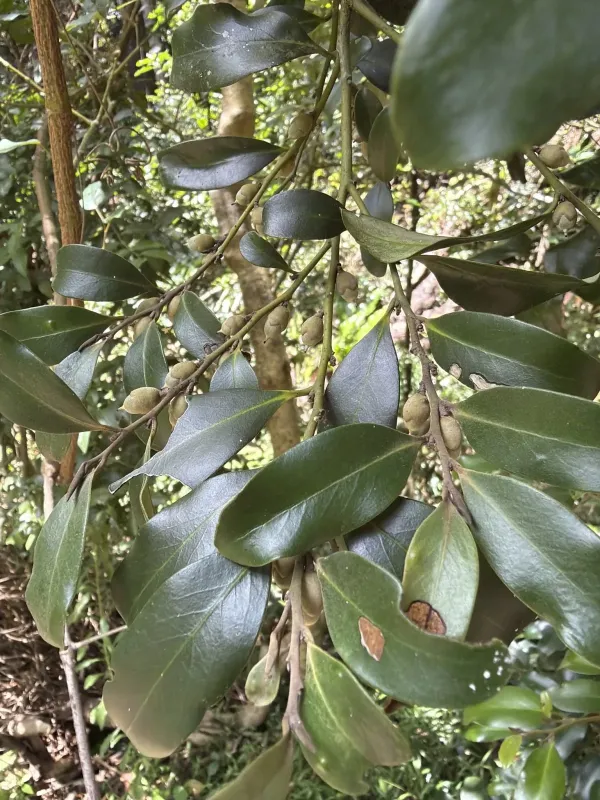
Description
Growing requirements
Southern persimmon (Diospyros australis) is an evergreen tree or large shrub that belongs to the Ebenaceae family. It is native to the coastal rainforests of eastern Australia, where it thrives in humid and mild environments.
The plant is not frost-tolerant and requires subtropical conditions for survival. In cooler regions, it must be grown in greenhouses or as a container plant that can be brought indoors during winter months to protect it from freezing temperatures.
It prefers well-draining, nutrient-rich soils that retain some moisture without becoming waterlogged. A slightly acidic to neutral soil profile is ideal for healthy root development and efficient uptake of essential nutrients.
Bright, filtered light is essential for the tree's health. While it can tolerate some shade in its natural habitat, cultivated specimens perform best when provided with consistent light exposure to maintain their dense, glossy green foliage.
Proper agronomic care involves regular fertilizing during the growing season using a balanced fertilizer. Additionally, consistent pruning helps maintain a compact size and encourages the growth of healthy, new wood throughout the year.
Yield
The Southern persimmon is primarily cultivated for ornamental purposes rather than large-scale food production. Its beautiful appearance and ability to maintain foliage throughout the year make it a favorite for botanical gardens and private collections.
The fruits are small, yellow-to-orange berries that ripen on the tree. While they are edible, they are often overshadowed by larger commercial persimmon varieties, making them more of a curiosity for garden enthusiasts.
Main diseases and pests
Common pests affecting this species include scale insects and mealybugs, which tend to infest the underside of leaves and branch junctions. Applying horticultural oil or systemic treatments is effective for managing these populations.
Root rot caused by overwatering is a significant threat, especially in container-grown plants. Ensuring adequate drainage and allowing the top inch of soil to dry out between waterings is the most effective preventative measure against fungal attacks.