
Globba racemosa
Globba racemosa
Description
Growing requirements
Globba racemosa is a perennial herbaceous plant belonging to the Zingiberaceae family. Native to the tropical regions of Southeast Asia, including India and China, it thrives in environments that mimic its natural forest floor habitat, characterized by diffused light and consistent humidity.
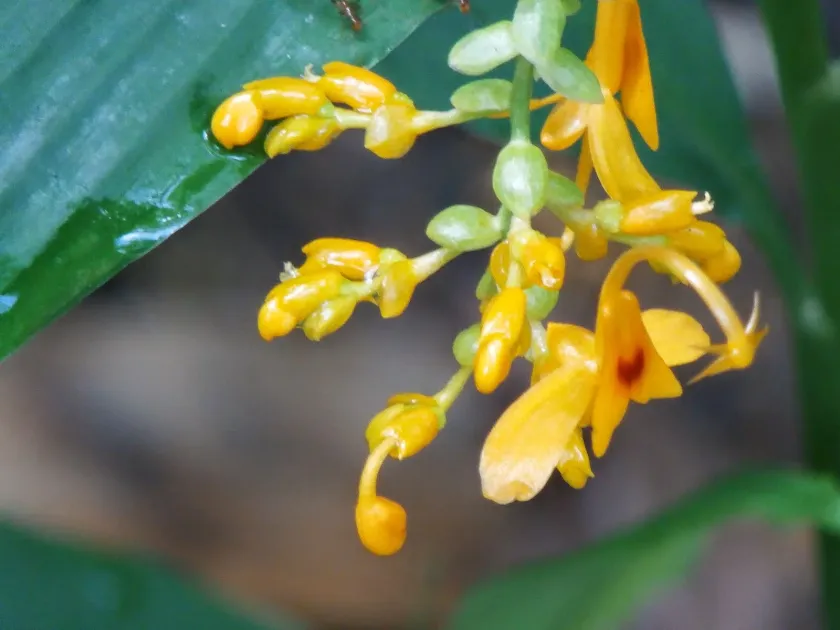
The plant features rhizomatous roots and upright stems that typically reach heights between 50 and 90 centimeters. Its foliage is lance-shaped, but the most distinctive feature is the terminal, pendulous raceme of flowers accompanied by decorative bracts that attract significant horticultural interest.
Temperature requirements for this crop are relatively strict, needing a range of +20°C to +28°C for optimal growth. It is highly sensitive to direct sunlight, which can quickly dehydrate the leaves and fade the vibrant colors of the bracts, making partial shade essential for cultivation.
The soil must be well-drained, rich in organic matter, and slightly acidic to neutral (pH 5.5–7.0). Maintaining a loose texture in the growing medium is crucial to ensure that the rhizomes receive sufficient oxygen and do not become waterlogged.
Watering management is key to the success of this culture; it requires consistent moisture during the growing season. However, once the plant enters its dormancy phase and the leaves begin to yellow, the watering frequency must be drastically reduced to protect the rhizome from rot.
Main diseases and pests
Root rot is the most common disease encountered during the cultivation of Globba racemosa. It is primarily caused by poor drainage and excessive moisture in the soil, especially during periods of low ambient temperature or poor ventilation.
Pest management is often focused on spider mites, which thrive in low-humidity environments. Regular misting and monitoring are recommended to prevent infestations that can cause leaves to yellow and drop prematurely.
Mealybugs are another potential threat that tends to hide in the leaf axils. Physical removal combined with systemic insecticides is the standard approach to keeping these pests under control before they cause significant damage.
Fungal leaf spot diseases may appear if there is poor air circulation around the plants. Pruning affected leaves and improving the microclimate by increasing airflow usually resolves the issue without the need for aggressive chemical intervention.
Invasive nematodes are a concern when importing or moving plant stock. It is vital to use sterile potting mixes and ensure that all new plants are quarantined to prevent the introduction of these parasites into the wider cultivation area.