
White turmeric
Curcuma zedoaria
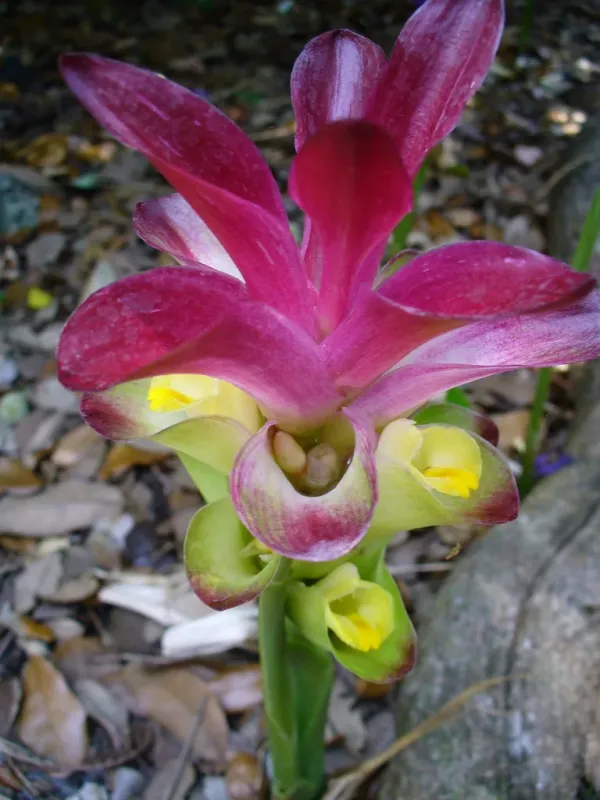
Description
Sowing dates
White turmeric is propagated vegetatively by planting healthy rhizome sections or whole rhizomes. The planting process typically begins during the onset of the warm season or immediately following the first significant rains in tropical climates.
The rhizomes are placed in prepared furrows at a depth of approximately 5 to 10 centimeters. A spacing of 30 to 40 centimeters between plants is essential to provide enough room for the rhizomes to expand and develop fully without overcrowding.
Prior to planting, the soil must be deeply tilled to ensure a loose structure, which allows for easier expansion of the rhizomes underground. Incorporating organic matter, such as well-rotted compost or manure, significantly boosts the initial growth of the young shoots.
Commercial plantations often use mechanical row planters, but manual planting remains common for smaller scale operations to ensure that each piece of rhizome is placed in the optimal position. Initial watering immediately after planting is crucial to settle the soil.
Selection of high-quality, disease-free seed rhizomes is a critical step in the agronomic process. Pre-sprouting the rhizomes in a warm, shaded area before planting can significantly decrease the germination time and lead to a more uniform crop canopy.
Growing requirements
Curcuma zedoaria is a member of the Zingiberaceae (ginger) family and thrives in tropical environments with high humidity and significant annual rainfall. It performs best in temperatures ranging from 20 to 35 degrees Celsius.
The ideal soil for white turmeric is a fertile, well-draining loam or sandy loam. Poor drainage is a major risk factor, as waterlogging for extended periods can lead to rhizome rot and significant yield loss.
While the crop thrives in full sun, it can tolerate partial shade, which is often beneficial in extremely hot climates to prevent leaf scorching. Protection from high-velocity winds is recommended to preserve the integrity of the broad foliage.
Field maintenance involves regular weeding, as the crop does not compete well with vigorous weeds in the early stages of development. Mulching the surface with organic material is a recommended practice to maintain soil moisture and suppress weed growth.
Nutrient management focuses on balanced fertilization. Phosphorus and potassium are particularly vital for the development of the rhizomes, while nitrogen should be managed carefully to avoid excessive leafy growth at the expense of root yield.
Main diseases and pests
Rhizome rot, caused by soil-borne pathogens such as Fusarium and Pythium, is the most serious threat to white turmeric plantations. Preventive measures include choosing well-drained sites and practicing strict crop rotation to avoid pathogen buildup.
Leaf spot diseases, which are often fungal in origin, can diminish the plant's photosynthetic capacity. Prompt removal of infected leaves and proper plant spacing are effective cultural practices to reduce the humidity levels that favor disease spread.
Root-knot nematodes can cause significant damage by affecting the roots and rhizomes, leading to stunted plants. Soil solarization or the use of nematode-resistant varieties, if available, are recommended management strategies for infested soils.
Certain insect pests, such as leaf-eating caterpillars and rhizome borers, may require intervention. Regular scouting of the fields allows for early detection and the use of integrated pest management (IPM) techniques to keep populations under economic thresholds.
Maintaining strong, vigorous plants through adequate nutrition and irrigation is the best natural defense against most diseases and pests. A healthy plant is significantly more resilient to biotic stressors than a nutrient-deficient one.
Harvesting
The harvest phase occurs 8 to 10 months after planting, signaled by the yellowing and drying of the plant's aerial foliage. This period indicates that the plant has completed its vegetative cycle and the rhizomes have matured.
The rhizomes are carefully unearthed using hand tools or mechanical diggers. Great care is taken during this process, as even minor cuts or abrasions can become entry points for post-harvest pathogens that can spoil the entire batch.
Following harvest, the rhizomes are washed to remove soil, and the secondary roots are trimmed. A short blanching process in boiling water is often performed to kill enzymes and prevent sprouting during storage, while also helping to preserve color.
Drying is a critical step, usually performed under controlled conditions to reduce moisture content to safe levels (below 12 percent). This prevents fungal growth and ensures the longevity of the active compounds present in the rhizomes.
Once dried, the product is sorted, graded, and packaged for commercial distribution. White turmeric is highly valued for its use in herbal medicine, as a spice, and as a raw material in the cosmetic and pharmaceutical industries.