
Javanese turmeric
Curcuma zanthorrhiza
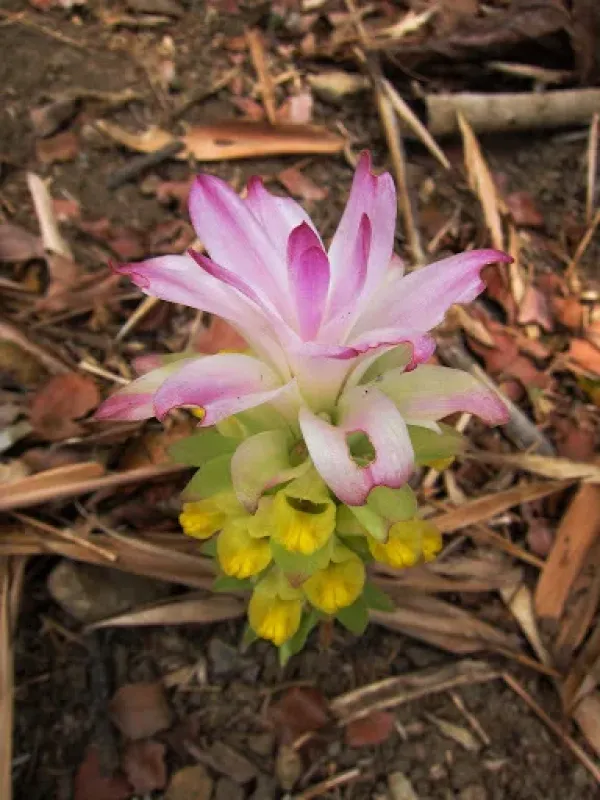
Description
Sowing dates
Javanese turmeric (Curcuma zanthorrhiza) is a plant belonging to the Zingiberaceae family, primarily cultivated for its large, medicinal rhizomes.
The crop is propagated vegetatively by planting healthy rhizome sections, known as seed rhizomes, which contain active growth buds for sprouting.
Planting typically takes place at the onset of the rainy season to ensure sufficient moisture for successful establishment and vigorous early growth.
A well-prepared soil bed is essential; deep ploughing and the incorporation of organic compost create a loose medium that allows for optimal rhizome expansion.
Strategic spacing, usually 60 cm between rows, is maintained to provide sufficient space for foliage development and efficient nutrient uptake across the entire field.
Growing requirements
This crop thrives in tropical environments, requiring consistent temperatures between 25°C and 30°C to maintain an active metabolic state throughout the growing season.
The plant prefers fertile, well-draining, loamy soils rich in organic matter, avoiding heavy clay soils that can trap water and cause root rot.
Adequate moisture is critical, though excessive standing water must be prevented; therefore, ensuring proper field slope and drainage systems is a standard necessity.
Partial shade is often beneficial in the early stages of growth, although mature plants can adapt to higher levels of sunlight exposure if moisture levels remain high.
Regular fertilization, balanced with appropriate levels of potassium and nitrogen, is required to support the significant biomass production of the rhizomes.
Yield
The yield of Javanese turmeric is determined by the environmental conditions, soil health, and the management practices employed throughout the growing cycle.
On average, farmers can expect a yield ranging from 15 to 25 metric tons of raw rhizomes per hectare, depending on local climate and cultivation intensity.
Yield components are highly sensitive to the duration of the growing period, as rhizome thickening continues until the onset of plant senescence.
Modern farming techniques, such as the use of high-quality organic fertilizers and drip irrigation, significantly contribute to increasing the total output per area.
Quality assessment is based on the concentration of curcuminoids and aromatic essential oils, which are the primary drivers of its market demand.
Main diseases and pests
Root diseases, particularly those caused by soil-borne pathogens like Fusarium and Pythium, represent the most significant threat to the health of the turmeric plantation.
Excessive humidity combined with poor drainage creates ideal conditions for these fungi to colonize the rhizomes, leading to severe decay and reduced crop value.
Nematodes are another common pest that damages the root system, stunting plant growth and making the crop more susceptible to secondary pathogenic attacks.
Leaf-eating insects can cause significant foliage damage, which lowers the photosynthetic capacity of the plant and reduces the overall carbohydrate storage in the rhizomes.
Integrated pest management, including crop rotation and the use of healthy, disease-free seed material, is crucial for mitigating risks in commercial farming.
Harvesting
Harvesting is performed when the plant's aerial foliage turns yellow and withers, indicating that the rhizomes have entered the dormant stage and reached maturity.
Typically, the harvest occurs between 9 and 11 months after the initial planting date, depending on local seasonal weather variations and site-specific conditions.
Rhizomes are carefully excavated to avoid mechanical damage, which can lead to rapid post-harvest deterioration if not handled with appropriate care.
After excavation, the rhizomes are cleaned, washed to remove soil, and sorted into categories based on size and specific use, such as seed or processing material.
Proper post-harvest processing, including dehydration or powdering, is essential for maintaining the quality and extending the shelf life of the harvested product.