
Jewel of Burma
Curcuma roscoeana
Description
Growing requirements
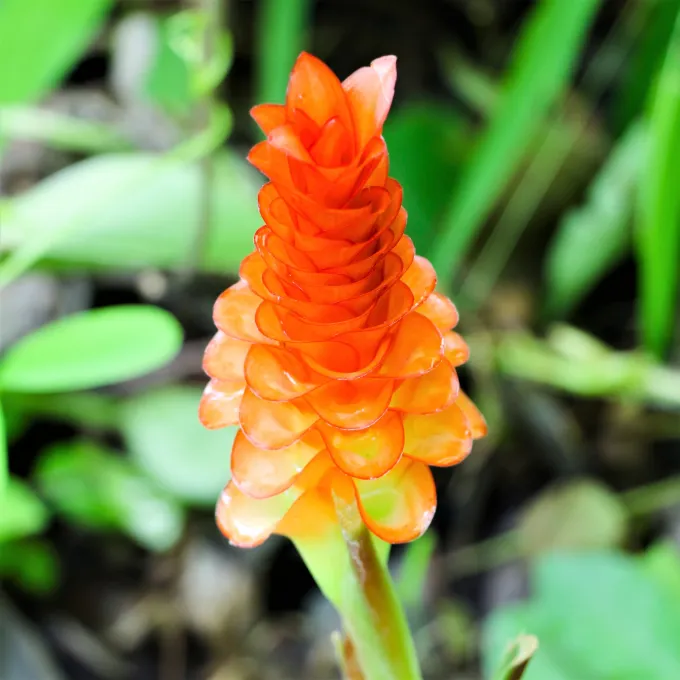
Curcuma roscoeana, commonly referred to as the Jewel of Burma, is a distinct perennial plant within the Zingiberaceae family. It is prized by growers for its striking, long-lasting orange-red floral bracts that emerge from thick, lush foliage.
Originating from the tropical regions of Myanmar, this species thrives in humid forest floors. As an agricultural or horticultural crop, it requires a controlled environment that mimics these natural conditions to produce high-quality foliage and blooms.
The cultivation of this plant necessitates a well-draining, nutrient-rich potting mix that prevents waterlogging. Because the plant relies on subterranean rhizomes to store energy, maintaining the integrity of these organs through precise irrigation is essential.
Temperature requirements are stringent; the plant prefers constant warmth ranging from 22 to 28 degrees Celsius. Any sudden drop in temperature or prolonged exposure to cold drafts can cause the plant to enter an premature dormancy state, hindering its development.
In addition to warmth, high ambient humidity is crucial for maintaining leaf health. Growers should aim for at least 60-70% humidity levels, ensuring that the plant is placed in an area with bright, indirect sunlight to facilitate efficient photosynthesis without scorching.
Main diseases and pests
The most significant threats to Curcuma roscoeana cultivation are soil-borne pathogens. Root rot caused by Pythium or Fusarium fungi is the primary concern, usually triggered by stagnant water in the growing medium during periods of lower temperature.
Spider mites are the most persistent insect pests, particularly in indoor environments where the air may become dry. These pests thrive in warm conditions, causing stippling and disfigurement of the foliage if left uncontrolled.
Scale insects and mealybugs can also infest the plant, hiding in the leaf axils. Frequent monitoring of these sheltered areas is a standard agricultural practice required to maintain the visual quality and vigor of the crop.
To mitigate these risks, it is highly recommended to implement a robust hygiene protocol, which includes sterilizing pots between cycles and ensuring that all introduced plant materials are free from infestation before integration.
Application of fungicides should be used as a preventative measure during high-humidity seasons, while insect infestations are best managed through targeted botanical soaps or systematic horticultural oils.