
Hidden lily
Curcuma petiolata
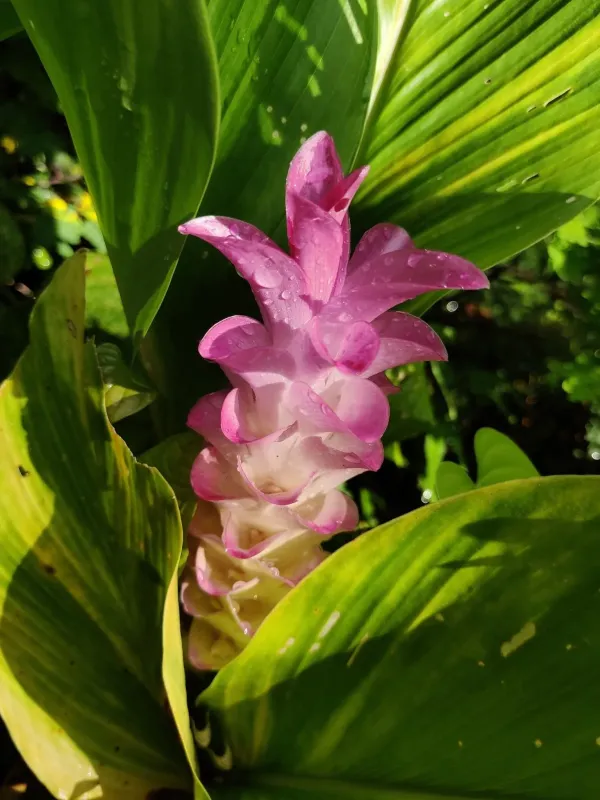
Description
Sowing dates
Curcuma petiolata is primarily propagated via rhizome division. The ideal time for planting is early spring, just as the dormant rhizomes begin to show signs of renewed metabolic activity after the winter rest.
When planting, bury the rhizomes about 5 to 7 centimeters deep in a loose, well-draining soil mix. Ensuring the growth buds are pointed upwards is essential for successful sprout emergence and balanced plant development.
For container-grown plants, selecting pots with adequate drainage holes is mandatory. In warmer climates, rhizomes can be planted outdoors once soil temperatures consistently exceed 20 degrees Celsius to prevent rotting.
Maintaining a warm environment during the initial growth phase is critical. If the soil remains too cold, the rhizomes may fail to sprout or become susceptible to rot due to a lack of metabolic activity.
Once shoots appear, provide the plants with bright, indirect light. Gradual acclimatization to higher light intensities is recommended to avoid scorching the foliage, which is sensitive to direct sunlight.
Growing requirements
As a member of the Zingiberaceae family, the Hidden lily thrives in tropical environments. It requires high humidity levels, ideally between 60 and 80 percent, to maintain the health and luster of its broad leaves.
The soil should be fertile, rich in organic matter, and slightly acidic. A mixture of peat, loam, and perlite provides the necessary structure, allowing for both moisture retention and oxygen circulation around the rhizomes.
An optimal temperature range for active growth is between 22 and 28 degrees Celsius. The plant is highly sensitive to cold drafts and sudden drops in temperature, which can inhibit blooming and stunt overall growth.
Regular watering is necessary during the summer months to keep the soil consistently moist but never waterlogged. As temperatures begin to drop in autumn, watering frequency should be gradually reduced.
During the winter dormancy period, the plant sheds its foliage. Rhizomes should be kept in a cool, dry place, ideally around 15 degrees Celsius, until spring growth commences again.
Main diseases and pests
The most common pests affecting Curcuma petiolata are spider mites, which flourish in low-humidity environments. Regular misting and proper climate control are the primary defenses against these infestations.
Mealybugs can also inhabit the leaf axils, sucking the plant's sap and weakening it. Targeted application of horticultural oils or systemic insecticides is usually sufficient to manage these pests effectively.
Root rot is the most devastating ailment for this species, almost always resulting from overwatering or poor drainage. Infected rhizomes become soft, discolored, and must be treated by removing damaged parts.
Fungal spot diseases on leaves can occur when air circulation is insufficient or humidity is trapped. Improving ventilation and keeping the leaves dry helps prevent these infections from spreading.
Strict hygiene, including the use of sterilized soil and regular inspections, is the best strategy to keep your Hidden lily healthy and productive throughout its growing cycle.