
Hybrid turmeric
Curcuma hybrids
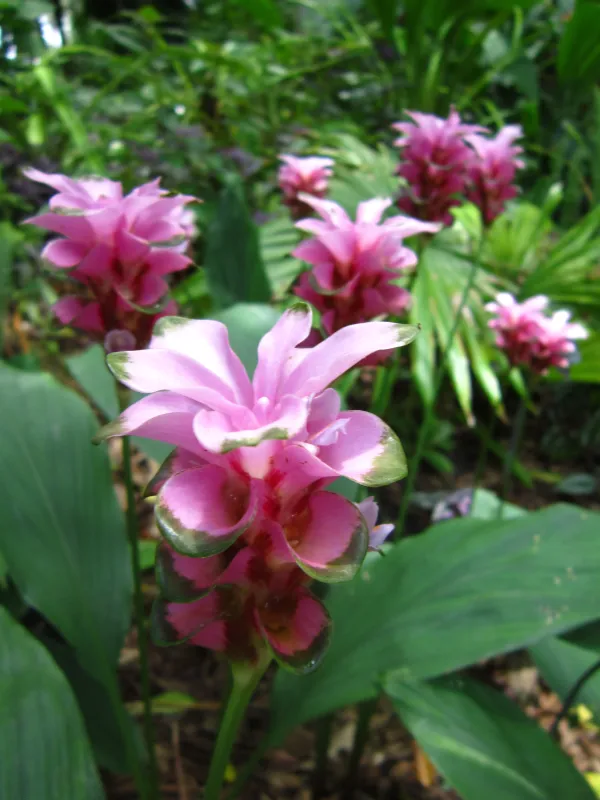
Description
Sowing dates
Hybrid turmeric (Curcuma hybrids) is a member of the Zingiberaceae family, cultivated for its versatile uses, including spice production and medicinal applications.
Propagation is primarily vegetative, utilizing rhizome divisions that must be planted in well-prepared, warm soil once all danger of frost has passed.
The planting process requires soil temperatures consistently above 20 degrees Celsius to ensure rapid sprouting and prevent rhizome decay in cold ground.
Spacing between plants should be sufficient, typically around 30 to 40 centimeters, to allow for the horizontal expansion of the rhizome system.
Pre-sprouting rhizomes in controlled greenhouse environments before transplanting is a recommended strategy to extend the effective growing season.
Growing requirements
This crop thrives in tropical conditions, requiring bright, filtered sunlight to avoid leaf scorching while ensuring enough energy for rhizome development.
Soil must be loose, rich in organic matter, and possess excellent drainage capabilities to prevent root rot, which is a common hazard for this species.
Consistent moisture is essential during the active growing season, requiring careful irrigation management that balances hydration with soil aeration.
The plant benefits significantly from the application of balanced fertilizers, particularly those high in potassium, which supports the healthy development of roots.
Mulching is a highly effective agronomic practice to maintain soil moisture levels and suppress weeds during the early stages of plant growth.
Yield
Hybrid turmeric is cultivated for its high-quality rhizomes, which are rich in curcumin and essential oils compared to many wild varieties.
Yield potential is heavily influenced by the length of the frost-free season and the consistency of the fertilization program throughout the cycle.
Advanced hybrid varieties are bred for higher biomass production and improved stress tolerance, leading to better economic returns for commercial farmers.
Regular monitoring of canopy development allows growers to estimate potential harvest volume and adjust nutrient applications accordingly.
Maximizing yield requires a focus on soil structure, ensuring that the rhizomes have enough loose medium to grow without physical restriction.
Main diseases and pests
Fungal diseases, specifically those causing rhizome rot such as Pythium, are the primary threat to healthy crops, often linked to improper drainage.
Pest pressures including nematodes and spider mites can significantly reduce plant vigor if not identified and managed in the early stages.
Integrated pest management strategies are essential, focusing on healthy planting material and crop rotation to break the disease cycle.
Maintaining air circulation around the plants and avoiding overhead irrigation can help reduce the incidence of foliar diseases during humid weather.
Chemical intervention should be utilized only as a secondary measure, with a priority on preventative cultural practices and environmental control.
Harvesting
Harvesting is initiated once the foliage begins to yellow and wither, indicating that the rhizomes have reached maturity and maximum nutrient storage.
The roots are harvested by carefully lifting them from the soil, ensuring the skin remains intact to prevent moisture loss and infection during storage.
Post-harvest handling involves cleaning, washing, and immediate sorting to separate high-quality rhizomes from damaged material.
Drying processes are critical to ensure that the final product reaches the correct moisture content for long-term storage or processing into powder.
Properly cured rhizomes should be kept in a cool, dry, and dark location to preserve their active compounds and quality for market distribution.