
Curcuma flaviflora
Curcuma flaviflora
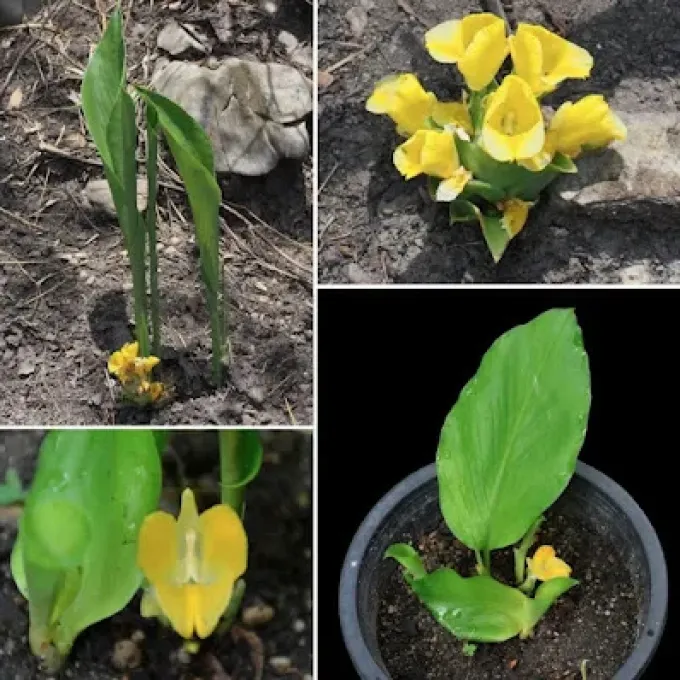
Description
Sowing dates
The planting of Curcuma flaviflora is primarily scheduled for the spring season, once soil temperatures consistently reach 20–25 degrees Celsius. In tropical environments, planting coincides with the onset of the rainy season, which provides the necessary moisture for early vegetative growth.
Propagation is achieved by dividing healthy rhizomes, ensuring each section has at least two or three viable buds. Planting depth should be approximately 5–8 centimeters, with a spacing of 40–50 centimeters between rows to facilitate proper air circulation and plant development.
When cultivating in controlled environments or greenhouses, planting times can be adjusted, provided the strict temperature requirements are maintained. The crop is extremely sensitive to cold snaps, so transplantation to open fields should be avoided until soil warmth is fully established.
Preliminary sprouting of rhizomes in containers prior to planting is a recommended practice to ensure uniform development and high germination energy. This method allows growers to select the most vigorous specimens before final placement.
Selecting an appropriate site is crucial for success. The plant thrives in well-draining, nutrient-rich loamy soils that possess high organic matter content and avoid waterlogging near the root zone.
Growing requirements
Curcuma flaviflora belongs to the Zingiberaceae (ginger) family and is a perennial herbaceous plant with a distinct dormant season. Originating from Southeast Asia, it demands specific environmental conditions that mimic a tropical forest floor.
The optimal temperature range for active growth is between 22 and 30 degrees Celsius. Temperatures dropping below 15 degrees lead to metabolic slowdown, while frost exposure can be lethal to the rhizomes unless the plant is fully dormant.
High relative humidity, ideally between 70% and 80%, is essential for this species. Low humidity levels often result in leaf curling, tip browning, and reduced overall plant productivity, emphasizing the need for regular misting or humidified environments.
Soil management requires maintaining a pH level between 6.0 and 7.0. The substrate must remain consistently moist but well-aerated; poor drainage is the primary cause of root rot in cultivated turmeric species.
While the plant requires abundant light, it is adapted to filtered sunlight or partial shade. Direct midday exposure can cause phototoxicity, manifested as leaf burn, making semi-shaded conditions ideal for commercial production.
Main diseases and pests
The primary pathological threats include root rot caused by Fusarium and other fungal pathogens, which proliferate in poorly drained, over-saturated soils. These infections can destroy rhizomes rapidly if environmental conditions are not managed.
Common pests include spider mites, which are particularly prevalent in dry, warm greenhouse conditions. Furthermore, root-knot nematodes can damage the rhizome system, stunting growth and reducing the potential harvest yield.
Disease prevention relies heavily on crop rotation and the pre-planting disinfection of rhizomes using systemic fungicides. Maintaining hygiene in the cultivation area is essential to prevent the accumulation of soil-borne pathogens.
Integrated Pest Management (IPM) strategies, including biological controls and targeted insecticide applications, are recommended upon the detection of infestation. Regular scouting of the leaf undersides is necessary to catch pest populations early.
Promoting plant health through balanced nutrition, specifically with phosphorus and potassium, strengthens the plant's natural resistance to diseases. Excessive nitrogen fertilization should be avoided as it leads to succulent, vulnerable tissue growth.