
Hybrid Macadamia
Macadamia integrifolia Maiden et Betche x tetraphylla L.A.S. Johnson
Description
Sowing dates
Planting of hybrid macadamia is mainly carried out by vegetative methods, most commonly through grafting commercial scions onto rootstocks grown from seeds. The optimal time for transplanting saplings into the open ground is the beginning of the rainy season, which ensures better root system establishment.
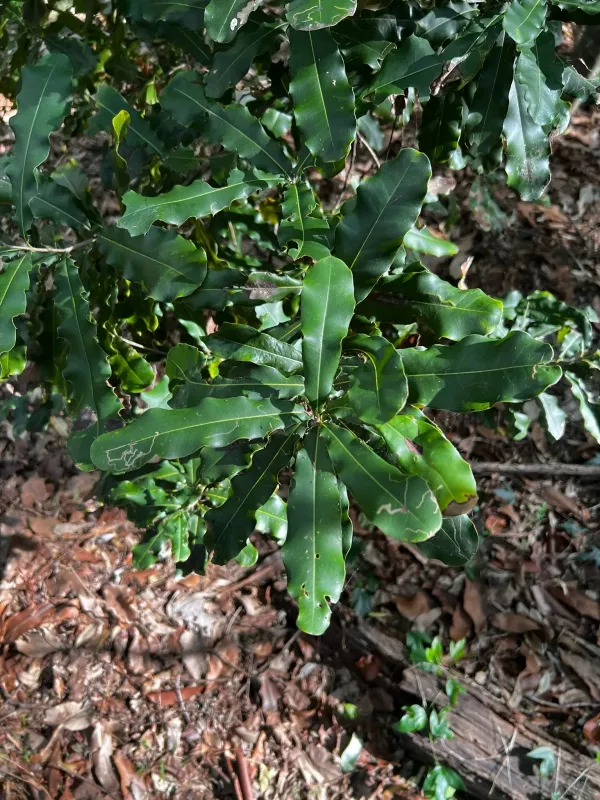
The plant is an interspecific hybrid of Macadamia integrifolia and Macadamia tetraphylla, combining the best traits of both species. It is an evergreen tree of the Proteaceae family, prized for its high yield and excellent nut quality.
The selection of the site should be based on good exposure to sunlight, as the crop is extremely demanding of light. In commercial orchards, planting schemes are followed that provide crown ventilation and ease of access for machinery.
The crop requires the preparation of planting pits with the addition of organic fertilizers and a drainage layer. It is important to avoid sites with water stagnation, as the hybrid's roots are sensitive to excessive moisture and oxygen deficiency in the soil.
In the first years after planting, saplings need regular monitoring and protection from strong winds that can damage young branches. Maintenance of the tree base includes mulching to maintain an optimal moisture level.
Growing requirements
Hybrid macadamia prefers a tropical and subtropical climate with mild winters. The optimal temperature range for active growth is from +20 to +30 degrees Celsius.
The tree is demanding regarding soil quality: it requires deep, loose, and fertile substrates with a pH level between 5.5 and 6.5. Heavy clay soils are fundamentally unsuitable for commercial cultivation.
The crop requires regular irrigation, especially during flowering and fruit setting. It is critical to maintain a balance, avoiding both soil desiccation and waterlogging.
Wind is a major limiting factor. Due to the shallow root system, mature trees can be toppled by strong storm gusts; therefore, shelterbelts are planted in regions with high wind exposure.
Plant nutrition must be balanced in micronutrients, with special attention to phosphorus content, to which macadamia is highly sensitive due to specific root exudates.
Yield
The period until the tree begins to bear fruit depends on the propagation method: grafted trees begin to produce nuts as early as 3–5 years after planting. Full productivity is reached between 10 and 15 years.
The yield of one mature tree can reach 30–50 kilograms of nuts per year under proper care. The stability of hybrid fruit production is ensured by their high adaptability to various abiotic factors.
The harvest period is prolonged because the nuts ripen unevenly. The commercial value is driven by the high content of valuable fatty acids in the kernels.
Fruits are harvested after they naturally fall to the ground. Fallen nuts must be quickly transported to the drying area to minimize the risk of damage from soil moisture and mold.
After harvesting, the nuts undergo husking and drying to a moisture content of no more than 1.5–3 percent. This is necessary to ensure long-term storage and efficient cleaning from the hard shell.
Main diseases and pests
Key pests include the nut borer and various caterpillars that damage flowers and young fruit. Pest control is carried out using integrated management strategies.
Fungal diseases, such as anthracnose and phytophthora, pose a serious threat to plantations in high-humidity regions. Prevention involves correct crown pruning to improve air circulation.
Nematodes can attack the roots, weakening the tree and reducing its nutrient uptake capacity. Affected trees are characterized by stunted growth and leaf chlorosis.
Stink bugs damage the nut kernels, making them unsuitable for the food industry. Regular inspection of the crop for pinprick marks on the shell is a mandatory quality control step.
Disease prevention requires maintaining high standards of orchard hygiene, including the timely removal of leaf litter and rotting fruits that can become sources of infection.