
Red Water Lily
Nymphaea rubra
Description
Growing requirements
The Red Water Lily (Nymphaea rubra) is a perennial aquatic plant belonging to the Nymphaeaceae family. Native to the tropical regions of India and Southeast Asia, this species thrives in stagnant or slow-moving freshwater bodies with high organic content in the sediment.
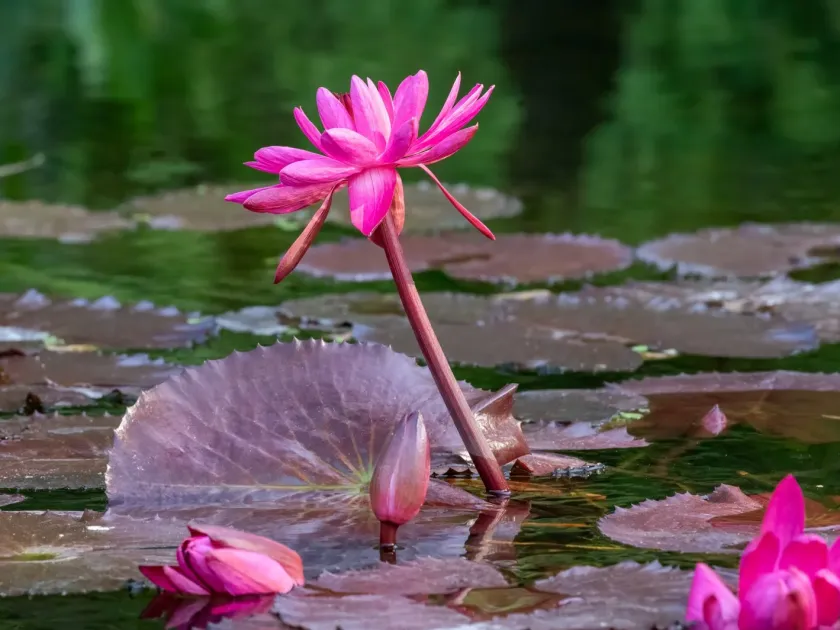
Botanically, it is known for its large, rounded floating leaves that exhibit a distinct deep red or burgundy coloration on the underside. Its strong rhizome anchors the plant into the substrate, allowing long petioles to reach the water surface to facilitate photosynthesis and gas exchange.
Cultivation requirements necessitate a tropical climate with water temperatures consistently between 24 and 28 degrees Celsius. Because it is highly sensitive to cold, it is primarily kept in controlled greenhouse environments or heated indoor ponds in regions with temperate seasonal changes.
The ideal soil medium consists of a heavy, clay-based mixture enriched with composted organic matter. This provides the essential nutrients required for the vigorous development of its extensive root system and ensures the plant remains well-anchored in the aquatic environment.
Proper agronomic management involves regular fertilization using aquatic-specific nutrient tabs inserted into the substrate near the root zone. Additionally, maintaining high water clarity and adequate sunlight exposure is vital to preserve the characteristic leaf pigmentation and encourage frequent flowering.
Main diseases and pests
The primary diseases affecting Nymphaea rubra include fungal leaf spot and root rot, which typically manifest under poor water circulation or stagnant conditions. Maintaining steady water movement and preventing the buildup of decaying organic debris are essential preventative practices.
Pest threats are dominated by aphids and water lily beetles, which can cause significant foliar damage by feeding on young tissue. Effective management involves regular visual inspections and manual removal or the application of biological control agents to ensure the health and beauty of the lily.