
Yellow water-lily
Nuphar lutea
Description
Growing requirements
The yellow water-lily (Nuphar lutea) is a perennial aquatic plant belonging to the Nymphaeaceae family. Originating from temperate regions of the Northern Hemisphere, it is frequently found in stagnant or slow-moving freshwater habitats across Europe and Asia.
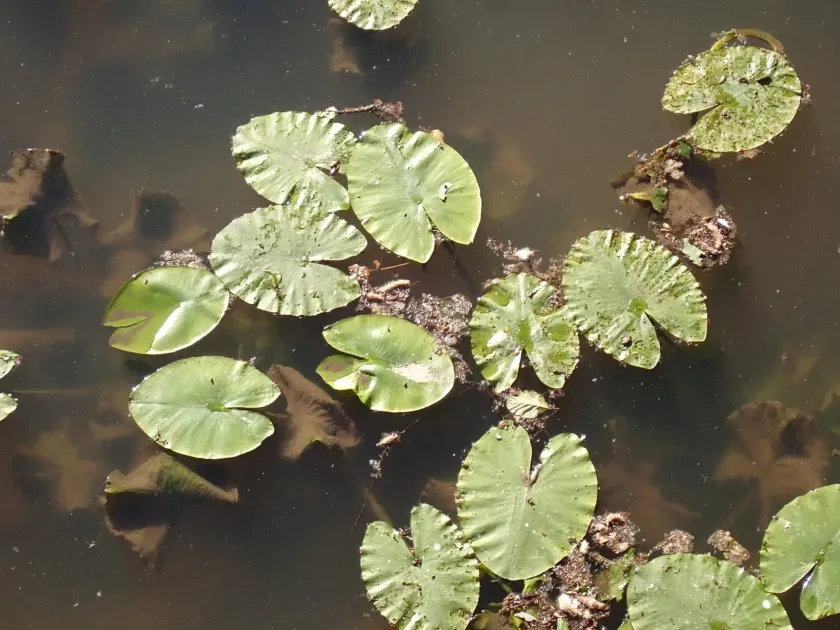
The plant is defined by its thick, fleshy rhizomes that anchor it into the muddy substrates of lake and pond bottoms. It exhibits dimorphic leaf growth: submerged leaves are thin and delicate, while floating leaves are broad, leathery, and dark green, providing buoyancy and solar radiation absorption.
Optimal growth conditions require nutrient-rich, organic-heavy sediments. The culture thrives in water depths between 0.5 and 2 meters, ensuring the plant remains below the ice line during harsh winters, which is critical for its long-term survival in cooler climate zones.
From an agricultural management perspective, this plant is used for pond stabilization and ecological restoration. Propagation is primarily achieved through the division of mature rhizomes during the spring, which are then secured into the sediment to prevent them from floating away before they root.
The yellow water-lily serves both aesthetic and medicinal purposes. Its roots have historical uses in traditional herbal medicine due to the presence of secondary metabolites, while in landscape design, it acts as a key element for creating balanced, healthy aquatic environments.
Main diseases and pests
Common biological threats include infestations by the water-lily beetle (Galerucella nymphaeae), which can defoliate the floating leaves. Furthermore, excessive nutrient loading in the water can lead to oxygen depletion, weakening the plant and making it susceptible to various rot-causing fungi.