
Three-nerved sundew
Drosera trinervia
Description
Growing requirements
The three-nerved sundew (Drosera trinervia) is a carnivorous plant belonging to the Droseraceae family. Native to the Cape region of South Africa, it has evolved to thrive in nutrient-poor environments by supplementing its diet with insect prey.
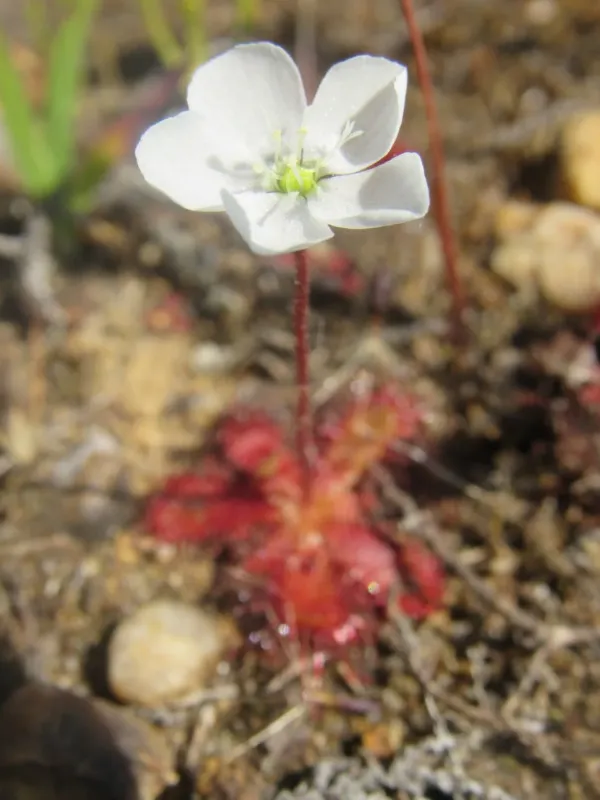
This species is characterized by its basal rosette of leaves, each featuring three distinct veins which are the diagnostic feature of the plant. The foliage is densely covered in sticky, glandular trichomes that capture small insects to meet the plant's nitrogen needs.
Cultivation requires specialized substrates such as a mix of peat moss and perlite or silica sand. It is vital to avoid any potting soils containing fertilizers, as the roots are evolved for low-nutrient conditions and will suffer from mineral toxicity.
Light intensity is crucial for the health of Drosera trinervia. It requires bright, indirect light or some direct morning sunlight to maintain its vibrant pigmentation and metabolic activity. Insufficient lighting will result in weak growth and a lack of mucilage production.
Watering must be done strictly with distilled water, reverse osmosis water, or rainwater. The tray method is standard for this species, ensuring the soil remains moist at all times without letting the roots become permanently submerged in stagnant, depleted water.
Main diseases and pests
Common health issues include fungal infections caused by stagnant air and excessive soil moisture. To prevent this, good ventilation around the plant is essential, especially during warmer months when evaporation rates are higher.
Pests such as aphids and spider mites can attack the leaves. Because these plants are sensitive to chemical inputs, growers should use insecticidal soaps only in diluted forms or remove pests manually to prevent damaging the sensitive glandular hairs.