
Spoon-leaved sundew
Drosera spatulata
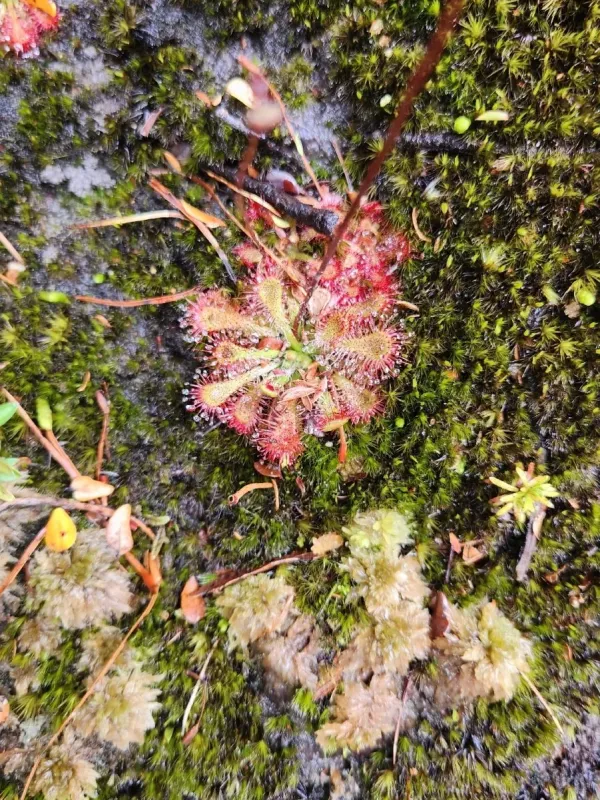
Description
Sowing dates
Sowing seeds of Drosera spatulata is best performed in late winter or early spring to ensure the seedlings benefit from the increasing photoperiod. The seeds are extremely tiny, so they must be scattered on the surface of the substrate without burying them.
High humidity is essential for successful germination, usually achieved by placing the sowing container in a mini-greenhouse or covering it with a transparent lid. The optimal temperature for germination ranges from 20 to 25 degrees Celsius.
Seedlings typically emerge within 3 to 6 weeks, depending on the age of the seeds and light conditions. Once the first true leaves appear, the cover should be removed gradually to acclimatize the young plants to the ambient environment.
Pricking out the seedlings should be done with extreme care once they reach a size of approximately one centimeter. Using tweezers is recommended to avoid damaging the delicate root system and the developing rosette.
After transplanting, seedlings need consistent, bright light to prevent stretching. They generally grow rapidly and can reach maturity within a single season if environmental conditions remain stable.
Growing requirements
The spoon-leaved sundew is a carnivorous plant of the Droseraceae family, native to nutrient-poor bog environments. Standard potting soils containing fertilizers or minerals are lethal to this plant and must be strictly avoided.
The ideal substrate is a mixture of long-fibered sphagnum peat and perlite or silica sand in a 2:1 ratio. This medium ensures the necessary acidity and drainage while keeping the root system cool and moist.
Water quality is critical; only distilled, rainwater, or reverse osmosis water should be used. Watering should always be carried out via the tray method, maintaining constant moisture without letting the substrate dry out.
Drosera spatulata requires intense, bright indirect light or artificial lighting for 12 to 14 hours per day. Insufficient light results in the loss of the plant's characteristic red pigmentation and its ability to produce sticky mucilage.
An ideal temperature range is between 18 and 28 degrees Celsius, accompanied by high relative humidity (above 50 percent). Stagnant air should be avoided to prevent the development of mold or fungal pathogens.
Yield
This culture is primarily cultivated as a decorative specimen for enthusiasts and botanical collections. Yield is measured by the production of robust rosettes and the plant's ability to multiply through side shoots.
Under optimal conditions, a single mother plant can produce multiple offsets, allowing for the rapid expansion of a collection. This makes it a highly productive species for home-based growers and small-scale greenhouses.
The plant flowers regularly, producing numerous tiny black seeds that germinate easily. Seed production is a reliable method for scaling up production and maintaining the genetic diversity of the collection.
Its commercial value is primarily aesthetic, as the plant’s ability to trap small insects serves as an engaging display. It is frequently sold as a popular carnivorous plant for hobbyists and educational indoor environments.
Final production consists of healthy, vibrant rosettes covered in glistening mucilage, which demonstrates successful cultivation and adherence to the specific biological requirements of the species.
Main diseases and pests
The most common pests affecting Drosera spatulata are aphids and spider mites, which feed on the delicate leaves. Chemical pesticides should be used with extreme caution, as the plant is highly sensitive to additives and oils.
Fungal infections, such as grey mold, can occur when airflow is poor and the substrate remains overly saturated. Proper ventilation and regular inspection are the primary measures for preventing these issues.
The use of tap water leads to salt accumulation in the peat, which eventually kills the roots. This mineral buildup is often the leading cause of decline in indoor cultivation and is easily mistaken for a disease.
Poor lighting weakens the plant, inhibiting its metabolic processes and the production of digestive enzymes. A weakened plant is significantly more susceptible to bacterial and fungal rot than a healthy, well-fed one.
Care must be taken during handling to avoid damaging the rosettes, as physical injury provides an entry point for opportunistic infections. Keeping the plant free of dead decaying leaf tissue is also recommended to reduce pathogen risks.