
Round-leaved sundew
Drosera rotundifolia
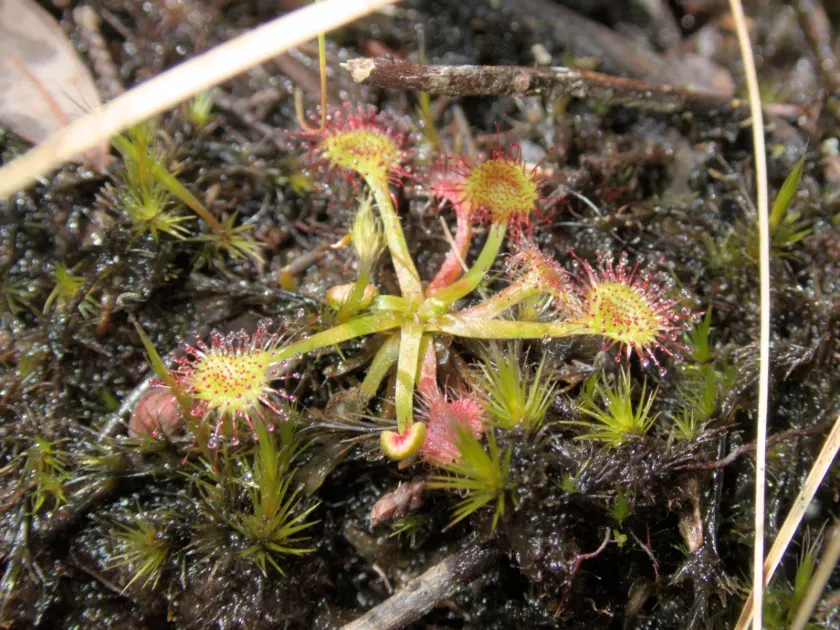
Description
Sowing dates
Cultivation of the round-leaved sundew is primarily achieved through seed propagation, which requires a highly specific environment to succeed.
Seeds should be sown on the surface of moist, high-quality sphagnum peat during late winter or early spring without covering them, as light is essential for germination.
It is necessary to cover the seed trays with clear plastic or glass to maintain a very high relative humidity, which is vital for the survival of the seedlings.
Germination typically occurs over several weeks provided the temperature remains steady, ideally within the range of 20 to 25 degrees Celsius.
Once the seedlings have developed three or four true leaves, they can be carefully pricked out into individual pots filled with a nutrient-poor acidic peat-based substrate.
Growing requirements
Drosera rotundifolia belongs to the Droseraceae family and is a specialized carnivorous plant native to nutrient-deficient, acidic peat bogs.
Success in cultivation relies heavily on the use of distilled, deionized, or rainwater, as tap water contains minerals that can cause root burn and death.
The growing medium must be composed of pure sphagnum peat or a mix of peat and perlite, ensuring it remains constantly moist at all times.
These plants require high levels of natural light to thrive; insufficient lighting will prevent them from developing their characteristic sticky mucilage and reddish pigment.
Temperatures should remain moderate during the growing season, while a dormant period with lower temperatures (5–10 degrees Celsius) is often required for mature specimens.
Yield
In the pharmaceutical industry, the round-leaved sundew is highly valued for its medicinal properties, particularly in treating respiratory issues and coughs.
Economic yield is measured by the dry mass of aerial plant parts harvested during the peak blooming phase, when the concentration of bioactive compounds is at its highest.
Commercial cultivation on specialized peat substrates allows for a sustainable supply, reducing the pressure of wild harvesting on natural populations.
With precise irrigation management and adequate light exposure, production plots can achieve steady yields over the course of the growing season.
Proper density management and greenhouse-style climate control are key factors in maximizing the biomass harvest of this sensitive medicinal crop.
Main diseases and pests
The most common disease threat is grey mold (Botrytis), which can spread quickly if air circulation is poor and humidity remains stagnant around the plant's rosette.
Common pests such as aphids and spider mites can infest the leaves, causing structural damage and hindering the plant's ability to capture prey for additional nitrogen.
The use of chemical pesticides must be avoided at all costs, as the plant's sensitive foliage is easily damaged by standard synthetic sprays and fertilizers.
Soil salinization, often caused by using improper water or excessive mineral input, is a major physiological stressor that leads to leaf yellowing and necrosis.
Maintaining high hygiene standards by removing dead leaves and ensuring fresh airflow is the most effective preventative measure against disease and pest outbreaks.
Harvesting
Harvesting is typically conducted in mid-summer when the plants are in full bloom, which is the period when secondary metabolites are most concentrated.
The aerial parts are harvested by carefully cutting the leaves and flower stalks, taking care not to disturb the root system or the substrate surface.
Drying must be performed in shaded, well-ventilated areas using thin layers to prevent the growth of mold and ensure the integrity of the fragile mucilaginous hairs.
Once dried, the raw material should be kept in cool, dark, and dry conditions to preserve the medicinal potency of the plant compounds for long-term storage.
Quality control during the harvest process is critical to ensure that no foreign organic matter or contaminants are included with the collected medicinal material.