
Drosera peltata
Drosera peltata
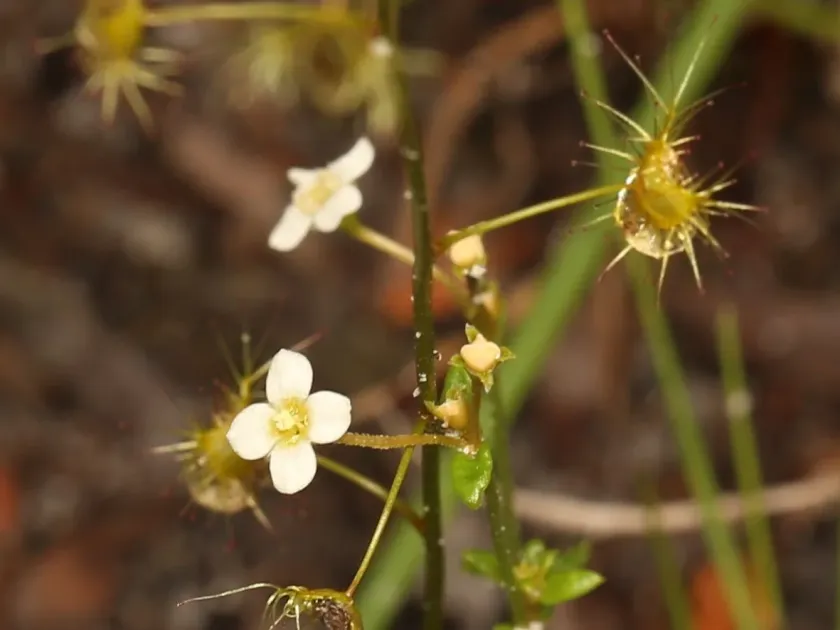
Description
Sowing dates
Drosera peltata, commonly known as the pale sundew, belongs to the Droseraceae family. It is a perennial plant that grows from tubers, allowing it to survive dry seasons in a dormant state.
Propagation is primarily achieved through seeds, which require stratification to break dormancy. Seeds should be sown on the surface of nutrient-poor media like peat moss mixed with perlite or silica sand.
Consistency in moisture is vital during the germination phase. The soil should never dry out completely, and maintaining a high humidity level is crucial for successful establishment.
When propagating via tubers, they should be planted in the dormant stage in a well-draining yet moisture-retentive substrate. Proper depth for tuber planting is typically 2–3 centimeters.
Sowing should ideally occur in early spring. Given its specific needs, sterile conditions are often preferred to prevent mold and algae from outcompeting the slow-growing seedlings.
Growing requirements
This species requires high light intensity to thrive and maintain its distinctive reddish color and sticky dew production. In cultivation, supplemental lighting is often used if natural sunlight is insufficient.
Water quality is the most critical factor. Only distilled, rainwater, or reverse osmosis water should be used. Tap water contains minerals that quickly poison the roots and kill the plant.
The substrate must be extremely low in nutrients. Any fertilizer will damage the delicate root system, as the plant is evolved to obtain nitrogen from prey insects.
Temperature management varies depending on the specific form of the plant. Generally, it prefers cool to moderate temperatures and needs a clear distinction between the growing and dormant seasons.
Ventilation is essential to prevent fungal infections. While the plant loves humidity, stagnant air combined with moisture creates a perfect environment for grey mold.
Yield
The economic value of Drosera peltata lies primarily in the pharmaceutical industry. Its leaves contain naphthoquinones like plumbagin, which have demonstrated antibacterial and antitussive properties.
Yield depends on the cultivation scale and the effectiveness of the microclimate control systems. Achieving a consistent harvest requires expert knowledge of carnivorous plant physiology.
It is also a highly prized specimen in the horticultural trade. Enthusiasts seek out this species for its unique shield-like leaf structure and its fascinating ability to capture prey.
Production for medicinal purposes is niche, as it requires large-scale greenhouse facilities equipped with precise environmental automation to maintain profitability.
Harvesting is labor-intensive, as the plant tissue is fragile and must be handled with care to preserve the integrity of the glandular hairs where active compounds are concentrated.
Main diseases and pests
Aphids and spider mites are the most common pests. They can quickly decimate a collection, and because the plant is sensitive to chemicals, treatment options are restricted.
Fungal pathogens, particularly those causing root rot, are common if the soil remains waterlogged without proper aeration. Sanitation is the best preventative measure.
Improper light conditions lead to etiolation, where the plant grows weak and pale. An etiolated plant is significantly more susceptible to environmental stress and pests.
Over-fertilization is a major threat. Even minor exposure to mineral-rich fertilizers or soil will lead to rapid root death and the collapse of the plant's metabolic functions.
Poor water management is a leading cause of plant loss. Using water with high TDS (Total Dissolved Solids) will lead to soil accumulation of salts, which is fatal for Drosera.
Harvesting
Harvesting involves carefully clipping the aerial parts of the plant during the peak of the growing season. This ensures the highest concentration of bioactive compounds.
Drying must be conducted in shaded, cool conditions. High heat or direct sunlight will degrade the medicinal components, significantly reducing the quality of the raw material.
The dried product should be stored in airtight, light-protected containers. This prevents oxidation and degradation of the sensitive chemical compounds over time.
Seed collection is delicate work due to the minuscule size of the seeds. Capsules are harvested once they turn brown but before they dehisce to scatter their contents.
Tubers are sometimes harvested to facilitate vegetative propagation for the next season, ensuring a steady supply of plants without the need to start from seed every time.