
Paradoxical sundew
Drosera paradoxa
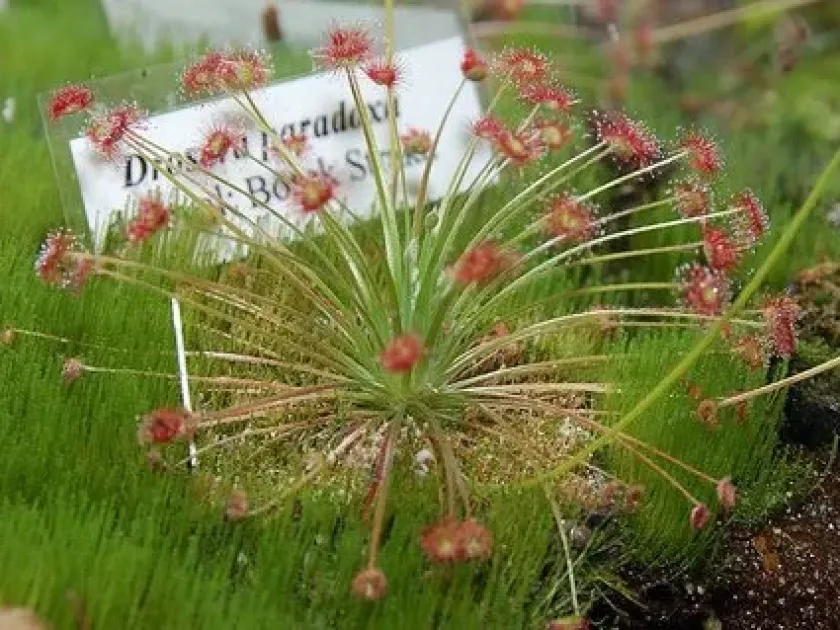
Description
Sowing dates
Drosera paradoxa is a tropical carnivorous plant belonging to the Droseraceae family, native to the Kimberley region of Australia. Cultivation typically involves starting from seeds, which require specific conditions to break dormancy and trigger germination.
Sowing should be done on a substrate consisting of a mixture of sphagnum peat and perlite or sand. Seeds are surface-sown and must not be covered with soil, as they require significant light exposure to initiate the germination process.
The ideal time for sowing is early spring when light intensity begins to increase. Providing a consistent temperature between 25°C and 28°C is crucial for achieving high germination rates within a few weeks.
During the initial phase, seedlings require a high-humidity environment, often provided by a transparent cover or a closed propagation chamber. This prevents the delicate root systems from drying out during the early growth stages.
Once the seedlings develop multiple true leaves, they should be gradually acclimated to lower humidity levels. Careful handling is necessary to ensure the young plants are not damaged during the transition to permanent growing pots.
Growing requirements
This species requires high light levels to maintain its characteristic reddish hue and the production of mucilage on its tentacles. If natural light is insufficient, high-output LED grow lights are necessary for at least 12–14 hours per day.
Temperature management is vital, as this plant thrives in warm, tropical conditions. Daytime temperatures should be kept between 25°C and 35°C, while nighttime temperatures should not drop below 15°C to ensure healthy metabolism.
The growing medium must be nutrient-poor, as Drosera paradoxa has evolved to obtain nitrogen through trapping insects. Standard potting soils containing mineral fertilizers are lethal to these plants and must be strictly avoided.
Watering must be performed using the tray method with only distilled, rainwater, or reverse-osmosis water. Any minerals present in tap water will accumulate in the medium and cause the plant to decline rapidly.
Adequate air circulation is necessary to prevent fungal issues, especially when humidity levels are high. While the plant prefers tropical conditions, it is known for being relatively adaptable if light levels remain consistently high.
Main diseases and pests
Fungal infections, such as grey mold, are the most significant threats to Drosera paradoxa. These typically develop in stagnant air conditions or during periods of temperature drops, quickly affecting the leaves and crown.
Aphids are the most common pest that attacks the plant's developing leaves and inflorescences. They consume plant sap, preventing the production of digestive enzymes and rendering the plant unable to capture prey effectively.
Mealybugs are another common nuisance, often hiding deep within the tight rosette of the leaves. Their presence can be identified by white, cotton-like substance and the stunted growth of the plant.
Root rot is often caused by the use of improper water or stagnant conditions in the bottom tray. Once the roots are compromised, the plant shows signs of dehydration and necrosis at the base of the rosette.
Preventative measures include regular visual inspection, ensuring proper airflow around the rosette, and immediate removal of any dead or decaying foliage to prevent the spread of opportunistic pathogens.