
Obovate sundew
Drosera obovata
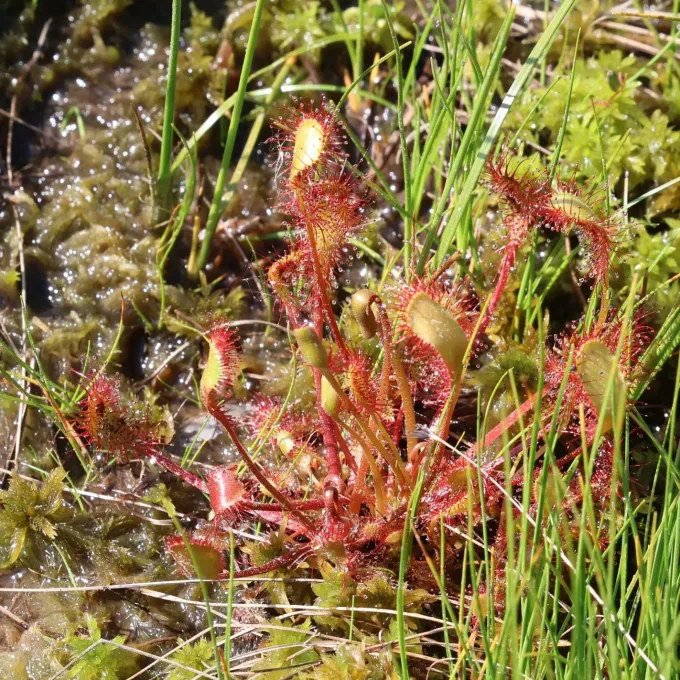
Description
Growing requirements
The obovate sundew (Drosera obovata) is a natural hybrid species within the Droseraceae family. It is a carnivorous perennial that primarily inhabits nutrient-poor wetlands and bogs, where it has evolved to obtain essential nutrients through the digestion of insect prey.
This species requires high levels of moisture and acidic, peat-based substrates. Sphagnum moss is considered the ideal growing medium as it helps maintain the necessary low pH levels and retains moisture consistently without becoming compacted.
Exposure to direct sunlight is vital for the health and coloration of the leaves. Inadequate light levels will hinder the production of the sticky mucilage, which is essential for trapping prey, and can significantly weaken the plant's overall vitality.
Water quality is of paramount importance for the cultivation of this species. Only pure water, such as rainwater or distilled water, should be used for irrigation, as the presence of dissolved minerals or salts can be toxic to the plant's sensitive root system.
The plant undergoes a natural dormant phase during the winter months. During this period, it requires lower temperatures to reset its biological cycle, allowing it to regenerate effectively when the growing season resumes in the spring.
Main diseases and pests
Habitat loss and alteration of the water table pose the greatest threats to the survival of this plant. Since it is highly specialized for wetland conditions, any significant drainage of its habitat will lead to rapid desiccation and eventual death.
In indoor or greenhouse environments, the plant is susceptible to infestations of aphids and spider mites. These pests thrive in poorly ventilated conditions and can quickly decimate the sticky tentacles of the leaves if left untreated.
Fungal infections, particularly root rot, are common if the substrate remains overly stagnant without adequate air circulation. Preventing water from pooling in the crown is essential to mitigate the risk of pathogen outbreaks.
Chemical contamination, including fertilizers and herbicides from surrounding fields, acts as a severe stressor. Even trace amounts of pollutants in the water supply can interfere with the plant's specialized metabolic processes.
Competition from taller, more aggressive herbaceous plants can lead to the shading of the sundew. Because the plant relies on efficient photosynthesis and insect trapping, prolonged shading reduces its ability to thrive and may eventually cause local extinction.