
Madagascar sundew
Drosera madagascariensis
Description
Sowing dates
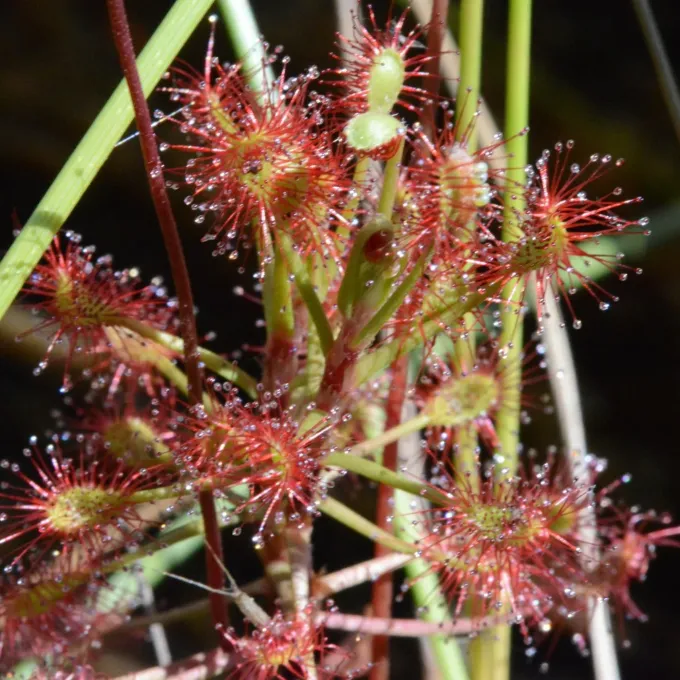
Madagascar sundew (Drosera madagascariensis) belongs to the Droseraceae family. It is a carnivorous perennial known for its long, erect stems and sticky, tentacle-covered leaves.
Propagation is typically done via seeds, which should be sown on the surface of a moist, nutrient-poor substrate like sphagnum peat moss. Do not cover seeds, as light is required for germination.
Spring is the ideal time for sowing, as increasing light levels help seedlings establish themselves quickly and prevent them from becoming leggy.
To simulate tropical conditions, keep the sowing containers covered with a plastic dome to maintain humidity, ensuring the temperature remains steady between 20 and 25 degrees Celsius.
Once seedlings appear, gradually increase ventilation to allow the plants to acclimate to the environment while ensuring the soil moisture level remains consistent.
Growing requirements
Cultivation requires a medium composed of acidic peat and perlite or sand; avoid any soil containing fertilizers, as these are toxic to the plant's sensitive roots.
Watering must be done using only distilled, reverse osmosis, or rainwater. The plant should sit in a tray of water to ensure the substrate remains saturated at all times.
This species requires high light intensity, often necessitating supplemental LED grow lights to maintain the red coloration of the leaves and the production of digestive mucilage.
Warm temperatures are essential, as this plant is native to tropical Africa and does not require a cold dormancy period; keep it above 15 degrees Celsius year-round.
Good air circulation is vital to prevent fungal growth, but avoid placing the plant in drafty areas that could cause the humidity levels to drop suddenly.
Main diseases and pests
Fungal infections are the most common threat, usually caused by stagnant air or overcrowding, which leads to mold growth on the leaf surfaces or in the substrate.
Pests like aphids and mealybugs can infest the plant, particularly on the flower stalks, which necessitates careful monitoring and the use of insecticidal soap if an infestation is detected.
Mineral buildup in the soil, resulting from using hard tap water, acts as a slow poison to the roots, eventually leading to stunted growth and death of the plant.
Spider mites can be problematic in drier environments, causing the sticky glands to stop functioning and leading to a loss of the plant's characteristic predatory efficiency.
Inadequate light exposure is a significant physiological threat, as it prevents the sundew from developing its defensive secretions, making it more vulnerable to opportunistic pathogens.