
Climbing sundew
Drosera macrantha
Description
Growing requirements
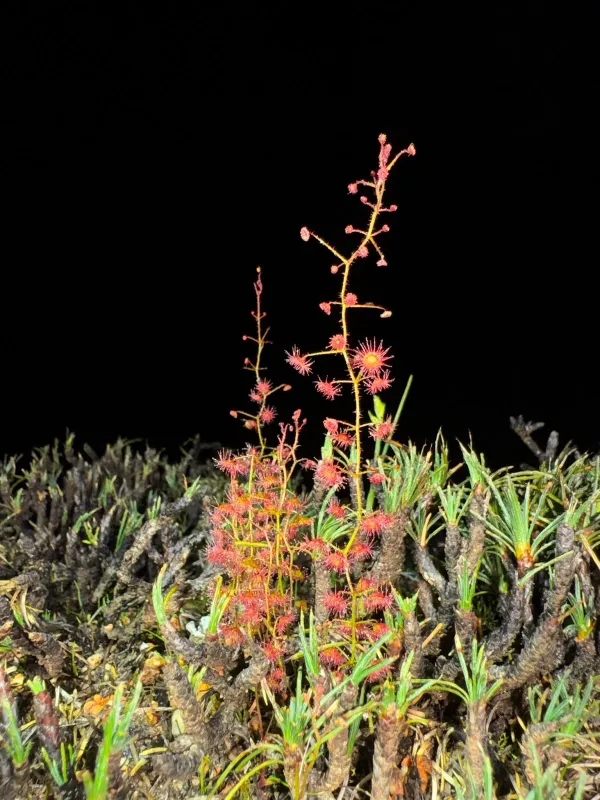
Drosera macrantha, commonly known as the climbing sundew, is a fascinating member of the Droseraceae family. It is endemic to Western Australia, where it has evolved to thrive in nutrient-poor, sandy soils by supplementing its nitrogen intake through carnivorous trapping mechanisms.
This culture requires a highly specific substrate, typically a mixture of peat moss and perlite. It is essential that the growing medium remains free from any fertilizers, as the presence of dissolved minerals can quickly kill the delicate root system of the plant.
Environmental conditions must mimic the Mediterranean-like climate of its native habitat. This includes a bright, airy environment with moderate temperatures and a well-defined seasonal cycle, including a winter growth phase and a dormancy period in summer.
Water quality is non-negotiable for successful cultivation. Only distilled water, reverse osmosis water, or pure rainwater should be used, as tap water contains minerals that accumulate and burn the roots of the plant.
High humidity is required, especially during the active growing season. While the plant benefits from constant soil moisture, it is vital to ensure that the water is not stagnant, which could lead to oxygen deprivation for the root system.
Main diseases and pests
Fungal infections are the most frequent health issues encountered when growing climbing sundew. These are usually triggered by poor air circulation and high humidity levels, often leading to rapid tissue death in stems and roots.
Pests like aphids and mealybugs can severely hamper plant growth. These insects cluster on the stems, draining nutrients and inhibiting the plant's ability to produce the sticky mucilage required for trapping prey.
Fungus gnats are common in indoor setups. Their larvae feed on organic matter in the substrate and may occasionally graze on the roots of the sundew, weakening the plant and creating entry points for opportunistic bacteria.
To manage threats effectively, manual removal of pests is preferred over chemical interventions. If pesticides are necessary, only products safe for carnivorous plants should be used, applied in diluted solutions to avoid leaf damage.
Maintaining a clean cultivation environment is essential. Removing dead foliage and ensuring proper spacing between plants helps to reduce the spread of spores and pests, contributing to the overall longevity of the crop.