
Drosera indica
Drosera indica
Description
Sowing dates
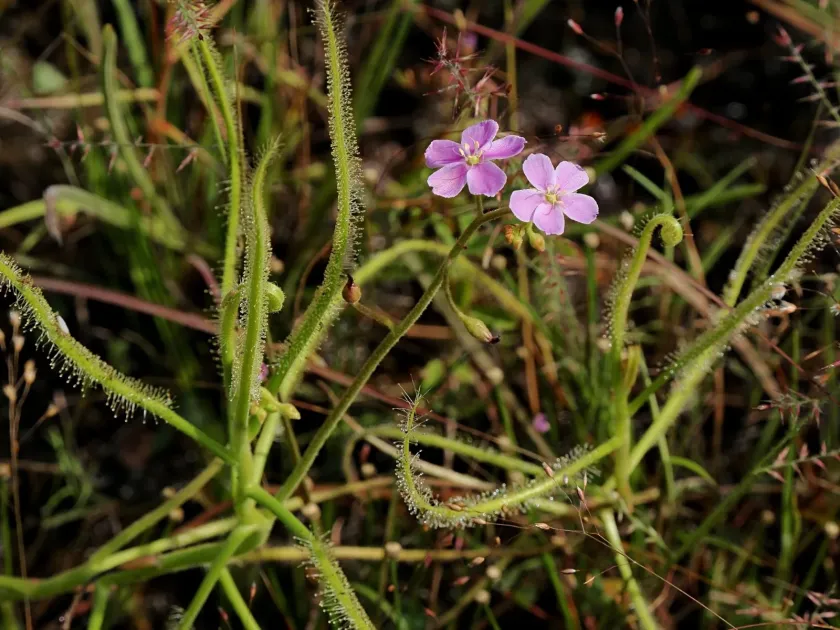
Drosera indica, commonly known as the Indian sundew, is an annual carnivorous plant belonging to the Droseraceae family. Unlike many perennial species in the genus, this plant completes its entire life cycle within a single growing season.
The seeds require specific thermal conditions to germinate effectively. The ideal time for sowing is during the spring when increasing daylight provides the necessary energy for young seedlings to establish their initial root systems.
A nutrient-poor substrate is essential, as the plant has evolved to thrive in boggy, acidic environments. A standard mixture of peat moss and perlite or silica sand, free from any added fertilizers, serves as the optimal medium for growth.
Sow the seeds directly on the surface of the moist substrate without covering them, as they require light to trigger germination. Maintaining a stable environment is key, so covering the container with plastic wrap helps to create the necessary high-humidity conditions.
Germination usually takes between two to four weeks when temperatures are maintained between 25 and 30 degrees Celsius. Keeping the soil consistently moist is vital during this period, but waterlogging should be avoided to prevent seed rot.
Growing requirements
This species requires high-intensity light for 12 to 14 hours per day to thrive. Insufficient light causes the plant to become etiolated, lose its vibrant coloration, and fail to produce the mucilage droplets necessary for catching prey.
Water quality is the most critical factor for success. Only distilled, rainwater, or reverse osmosis water should be used. The plant is extremely sensitive to mineral salts and chlorine commonly found in tap water, which can quickly lead to plant mortality.
Humidity levels should be kept between 60 and 80 percent. The plant thrives in warm, tropical conditions, making it an excellent candidate for greenhouse cultivation or terrariums where the microclimate can be strictly regulated.
The optimal temperature range is between 22 and 32 degrees Celsius. Being a tropical plant, Drosera indica does not tolerate cold drafts or temperatures below 15 degrees Celsius, which can lead to metabolic slowdown and tissue damage.
In the wild, this species is found in tropical regions of Africa, Asia, and Australia, often in open, seasonally flooded areas. Replicating these conditions by keeping the soil damp at all times is essential for the plant to reach its full size.
Main diseases and pests
Gray mold and other fungal infections are the primary threats, especially in environments with poor air circulation. Ensuring a steady flow of fresh air is the best preventative measure against pathogens targeting the glandular leaves.
Root rot is a common issue resulting from the use of non-sterile media or poor drainage. Using high-quality, clean sphagnum peat and perlite is essential to ensure that the root zone remains healthy throughout the plant's life cycle.
Pests like aphids and spider mites can attack the foliage. Because the plant is highly sensitive to chemical treatments, physical removal or the use of diluted biological controls is recommended over commercial pesticides.
Excessive fertilization is a major threat to this species. Because the plant is adapted to nutrient-deficient soil, adding any synthetic fertilizer to the substrate will cause immediate root burn and systemic collapse of the plant.
Mineral salt buildup in the substrate is another persistent threat. If white crusting appears on the surface of the soil, it indicates poor water quality or excessive evaporation, requiring a partial replacement of the top layer of the substrate.