
Thread-leaved sundew
Drosera filiformis
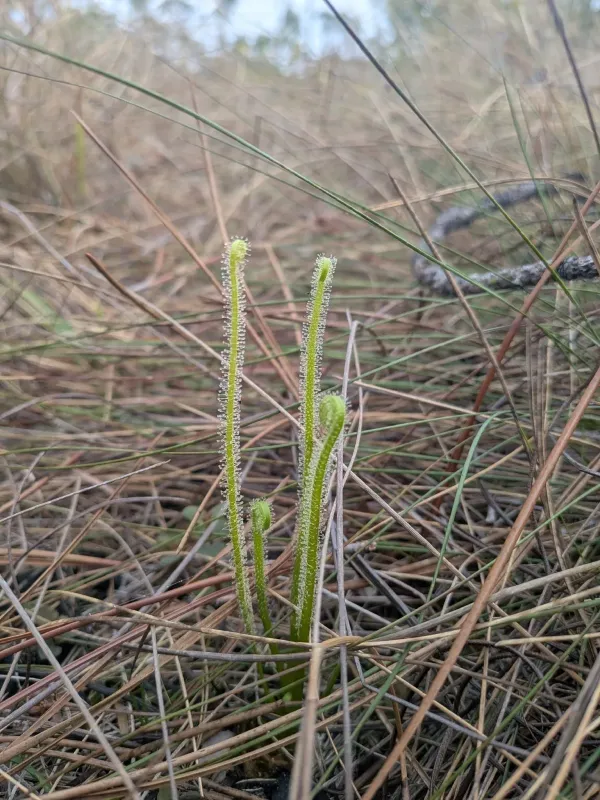
Description
Sowing dates
Seeds of the thread-leaved sundew should be sown during the winter months, allowing them to benefit from a natural cold stratification period before spring.
A cold treatment at 4°C for at least four weeks is essential to break seed dormancy and ensure a high germination rate in the spring season.
Sow seeds on the surface of moist peat moss mixed with perlite; they require light to germinate and should never be covered with soil layers.
Maintain high humidity by covering the pots with plastic wrap, creating a controlled environment that encourages the development of tiny seedlings.
Once seedlings have developed several true leaves, they can be carefully moved into individual pots filled with a suitable nutrient-poor mix.
Growing requirements
The thread-leaved sundew is a member of the Droseraceae family, naturally inhabiting nutrient-poor, acidic wetlands and bogs in temperate regions.
The potting medium must be strictly free of fertilizers, typically consisting of a blend of long-fiber sphagnum moss and coarse silica sand or perlite.
Watering must be done using only distilled, reverse osmosis, or rainwater, as tap water contains minerals that are toxic to this sensitive species.
This plant thrives in full sun, which is necessary to trigger the production of the sticky mucilage on its tentacles, which it uses to capture prey.
The pots should be kept in a tray of water to maintain constant moisture, effectively mimicking the swampy conditions of its original habitat.
Main diseases and pests
Fungal infections can quickly develop if the plant is kept in an environment with stagnant air, leading to the decay of the leaves and central crown.
Aphids are a common pest that target the sensitive new growth, sucking sap and causing the leaves to curl and lose their ability to trap insects.
Spider mites may colonize the leaves during periods of low humidity, causing them to dry out and lose the characteristic glistening sticky droplets.
Exposure to standard garden fertilizers is lethal, causing immediate root burn and systemic failure due to the plant's adaptation to nutrient-poor soils.
Lack of a clear dormant period during winter can weaken the plant over time, making it significantly more susceptible to various opportunistic pathogens.
Harvesting
The thread-leaved sundew is primarily cultivated for scientific interest, botanical collections, and as a specialized ornamental plant for bog gardens.
Seeds are harvested when the seed pods turn dark brown, indicating maturity, and are collected carefully to prevent them from dispersing prematurely.
Vegetative propagation via leaf cuttings is a popular method for gardeners, allowing for the cloning of particularly vigorous or attractive individual specimens.
When shipping or moving these plants, it is crucial to keep the substrate consistently damp and protect the delicate tentacles from mechanical damage.
Successful management of this crop requires a disciplined approach to water chemistry and light exposure to maintain the plant's health and appearance.