
Great sundew
Drosera anglica
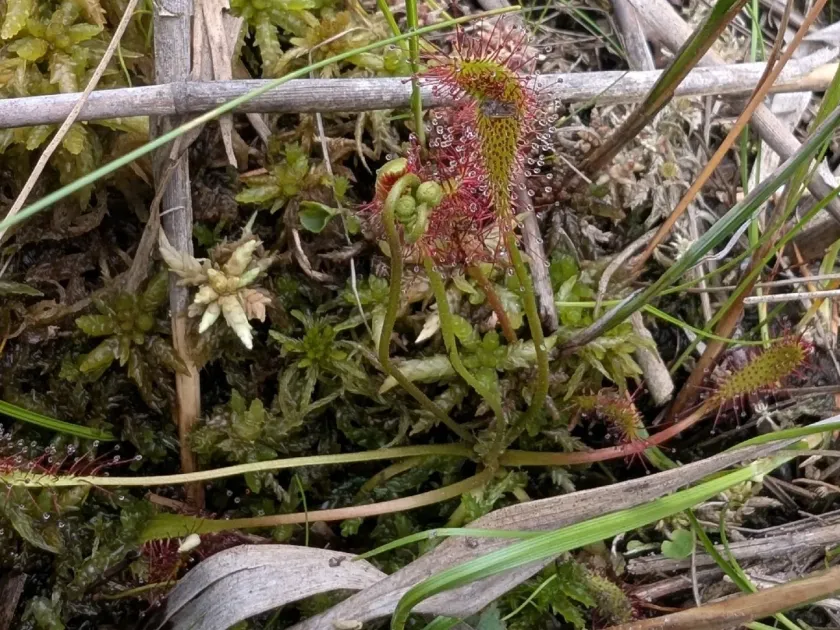
Description
Sowing dates
Seeds of the Great sundew require a mandatory cold stratification period to break dormancy and ensure high germination rates.
Sowing should be done on the surface of a damp, nutrient-poor substrate; seeds must not be buried as they are light-dependent for germination.
The optimal sowing window is late winter, allowing seedlings to establish a strong root system before the peak summer heat arrives.
Maintenance of high humidity levels is crucial during the germination phase; using clear covers helps to create a stable microclimate.
Strict water quality control is required; only distilled, deionized, or rain water should be used to prevent mineral accumulation.
Growing requirements
The species belongs to the Droseraceae family and is adapted to specific oligotrophic environments like peat bogs and fens.
The substrate must be highly acidic and nutrient-free, typically consisting of a blend of peat moss and perlite or inert sand.
Great sundew thrives in full sun exposure, which is necessary to trigger the production of the sticky digestive mucilage on the tentacles.
Temperature management is key; the plant performs best in moderate temperate conditions, avoiding extreme heat stress on the roots.
Feeding is rarely necessary in greenhouse conditions as the plants acquire sufficient nitrogen through the capture of small insects.
Main diseases and pests
Fungal diseases are the primary threat, often caused by stagnant air and poor drainage within the cultivation containers.
Pests like aphids and mealybugs can rapidly colonize the tentacles, hindering the plant's ability to capture prey and synthesize nutrients.
Substrate contamination with mineral fertilizers or tap water containing chlorine is fatal, leading to immediate root tissue necrosis.
Overcrowding of plants can lead to a lack of airflow, which facilitates the rapid spread of gray mold across the leaf surface.
Extreme fluctuations in humidity can cause the digestive enzymes to deactivate, leaving the plant vulnerable to opportunistic infections.