
Alice sundew
Drosera aliciae
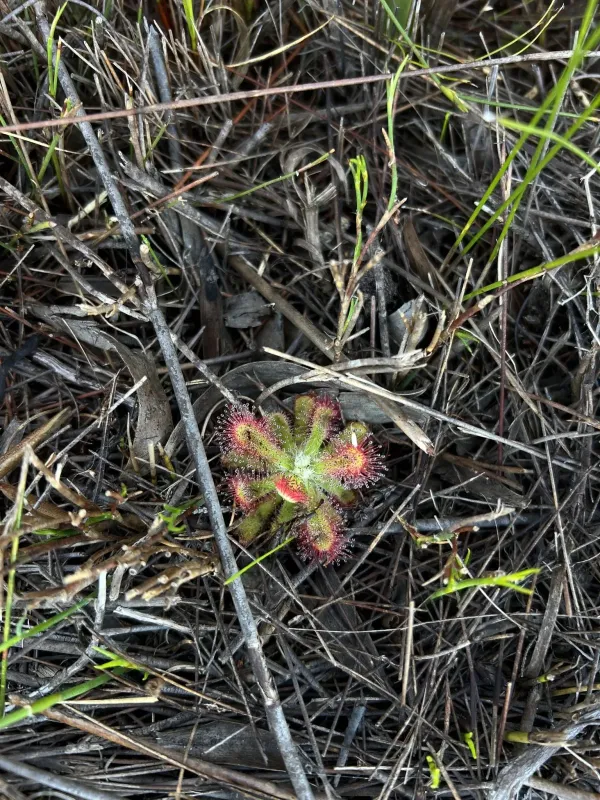
Description
Sowing dates
Sowing seeds of Drosera aliciae is best performed in late winter or early spring to ensure that the seedlings receive sufficient natural daylight.
Seeds should be sown superficially onto moist substrate and left uncovered, as they require light exposure to germinate effectively.
Containers must be covered with transparent film or glass to maintain a high level of humidity, replicating the natural greenhouse conditions required for germination.
The optimal temperature range for germination is between 20 and 25 degrees Celsius, maintaining stable conditions to ensure uniform seedling development.
Initial germination typically occurs within 3 to 6 weeks, after which the cover is gradually removed to acclimate the plants to lower humidity levels.
Growing requirements
Alice sundew is a perennial carnivorous plant belonging to the Droseraceae family, native to South Africa, which thrives in bright, filtered light.
The growing medium must be nutrient-poor, consisting strictly of sphagnum peat moss and perlite in a 1:1 ratio, as standard fertilizers are lethal to the plant.
Watering must be done exclusively with distilled, deionized, or rainwater via the tray method, ensuring the soil remains consistently moist without becoming waterlogged.
Excessive mineral salts in the water or soil are toxic to the plant, making standard tap water and fertilizers strictly prohibited for cultivation.
Humidity levels should ideally remain between 60 and 80 percent, which makes the plant an excellent candidate for terrariums or specialized indoor greenhouses.
Main diseases and pests
Aphids are the most common pests that attack the delicate leaves and flower stalks, feeding on the cellular sap and weakening the plant structure.
Poor air circulation and excessive dampness can lead to fungal infections such as grey mold, which appears as fuzzy patches on the rosettes.
Mealybugs can also pose a significant risk, hiding in leaf axils and hindering the overall growth rate of the carnivorous plant colony.
Root systems may be susceptible to bacterial rot if the peat substrate becomes degraded or if stagnant water remains in the tray for too long.
Pest control should rely on biological or manual removal methods, as chemical insecticides often cause severe damage to the plant's sticky mucilage glands.
Harvesting
While Alice sundew is not a food crop, growers often collect seeds once the flower stalks have completely dried out and turned brown.
Stalks are clipped gently, and the tiny seeds are shaken out of the seed capsules onto a clean sheet of paper for collection and storage.
Stored seeds should be kept in a cool, dry place inside paper envelopes to maintain their viability until the start of the next planting cycle.
In terms of long-term maintenance, the plant requires annual repotting into fresh peat substrate to ensure soil acidity and nutrient levels remain stable.
Repotting must be performed with great care to avoid damaging the sensitive roots, which are essential for the plant's ability to absorb moisture and maintain its health.