
Drosera adelae
Drosera adelae
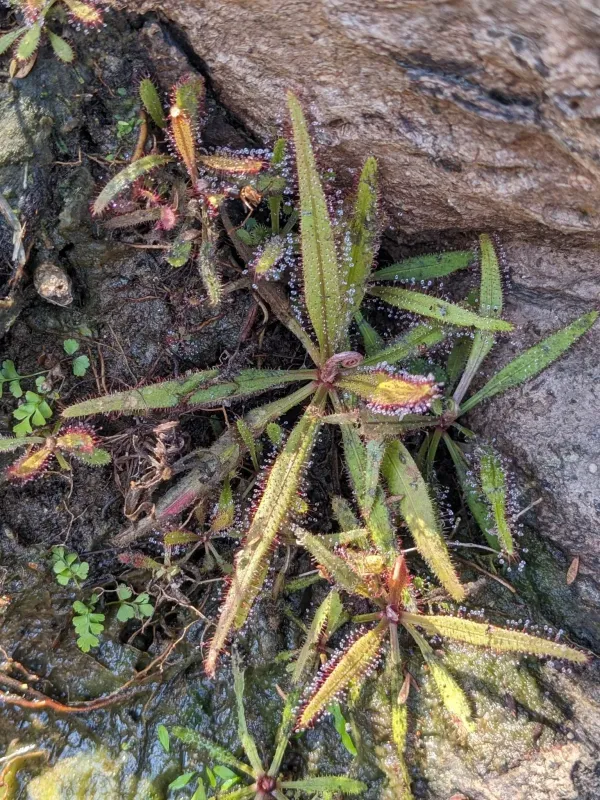
Description
Growing requirements
Drosera adelae, commonly known as the Lance-leaved Sundew, is a striking carnivorous plant belonging to the Droseraceae family. It is native to the tropical rainforests of Queensland, Australia, where it thrives in shaded, permanently moist habitats.
This species is highly prized for its broad, strap-like leaves that produce sticky mucilage. Unlike many other sundews, Drosera adelae is well-adapted to low-light conditions, making it an excellent candidate for terrarium cultivation.
The substrate must remain consistently moist but never waterlogged to the point of root rot. A mix consisting of equal parts peat moss and perlite or silica sand provides the perfect balance of moisture retention and root aeration.
Humidity levels should ideally be maintained above 70%. In arid indoor environments, providing a localized humid microclimate is essential to prevent the mucilage glands from drying out and the leaves from curling.
Water quality is non-negotiable for this species; only distilled, reverse osmosis, or rainwater should be used. The plant is extremely sensitive to mineral salts and chlorine, which are typically found in tap water and will quickly kill the plant.
Main diseases and pests
Fungal infections, such as grey mold (Botrytis), are significant threats in enclosed setups. Proper airflow is crucial to mitigate these risks and maintain a healthy microenvironment for the foliage.
Pests like aphids and spider mites can infest the plant, particularly in collections where air circulation is poor. Manual removal or highly diluted biological soap sprays are recommended, as harsh chemicals can easily damage the plant.
Temperature fluctuations exceeding the plant's tolerance range can trigger dormancy or stress responses. Keeping the temperature range consistent between 20°C and 25°C supports optimal metabolic activity.
The use of standard potting soil or compost containing fertilizers is fatal. The plant lacks the mechanism to filter high nutrient levels, leading to rapid root burn and total plant failure within days of exposure.
Algal growth on the surface of the substrate is often a sign of excessive light or stagnant water. To prevent this, ensure that the substrate is top-dressed with a thin layer of clean, fine-grained silica sand.