
Pine spiderwort
Tradescantia pinetorum
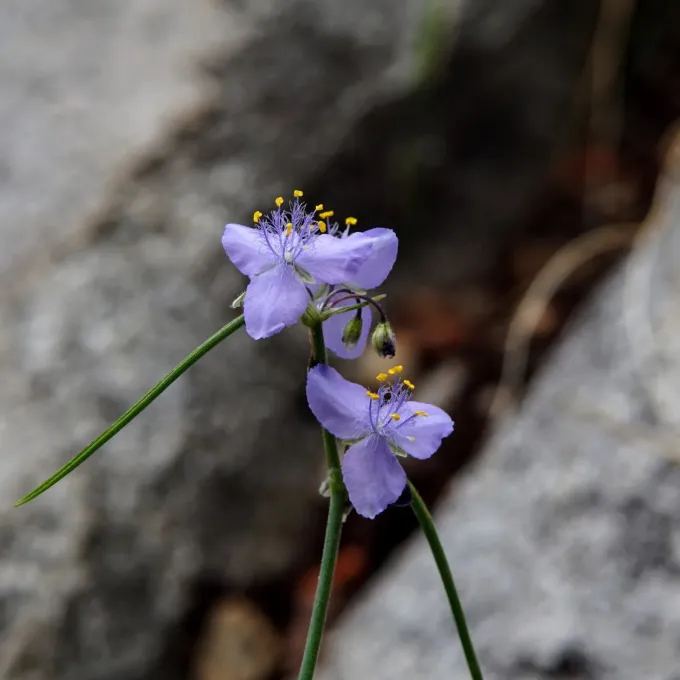
Description
Growing requirements
Pine spiderwort (Tradescantia pinetorum) is a perennial herbaceous plant belonging to the Commelinaceae family. This species is native to mountainous regions where it thrives under the canopy of pine and oak forests, indicating its preference for specific forest soils.
The plant is defined by its slender, trailing stems that grow easily and root at the nodes. The leaves are typically lanceolate and often exhibit fine pubescence, which serves as a natural defense mechanism against dehydration in its native habitat.
For successful cultivation, this crop requires bright, filtered light. While it is adapted to forest understories, it needs adequate light intensity to maintain its compact growth habit and vibrant leaf coloration.
Soil requirements are strict regarding drainage; the substrate must be well-draining, slightly acidic, and rich in organic matter. A mixture of peat, perlite, and coarse sand provides an ideal rooting medium that mimics the forest floor environment.
In terms of хозяйственного (economic) use, it is a highly regarded ornamental plant used in landscaping, greenhouses, and as an interior plant. Its propagation through cuttings is a standard practice, reflecting its status as a robust and adaptable horticultural crop.
Main diseases and pests
The most significant threats to the health of this species are infestations by spider mites, which thrive in low-humidity environments often found indoors during winter months.
Overwatering is the primary cause of root rot, a lethal condition caused by fungal pathogens such as Rhizoctonia or Pythium species. Maintaining a proper watering cycle is essential for plant survival.
Mealybugs can often colonize the leaf axils, sucking the sap and weakening the plant. Regular inspection of the plant's structure and the use of insecticidal soaps are recommended control strategies.
Fungal leaf spot diseases may appear if the plant is exposed to high humidity and poor air circulation. Providing adequate spacing between containers and ensuring proper ventilation can significantly reduce disease incidence.
To ensure long-term vitality, growers should perform annual repotting, which replenishes essential nutrients and allows for the removal of potentially contaminated or depleted growing medium.