
Ohio spiderwort
Tradescantia ohiensis
Description
Sowing dates
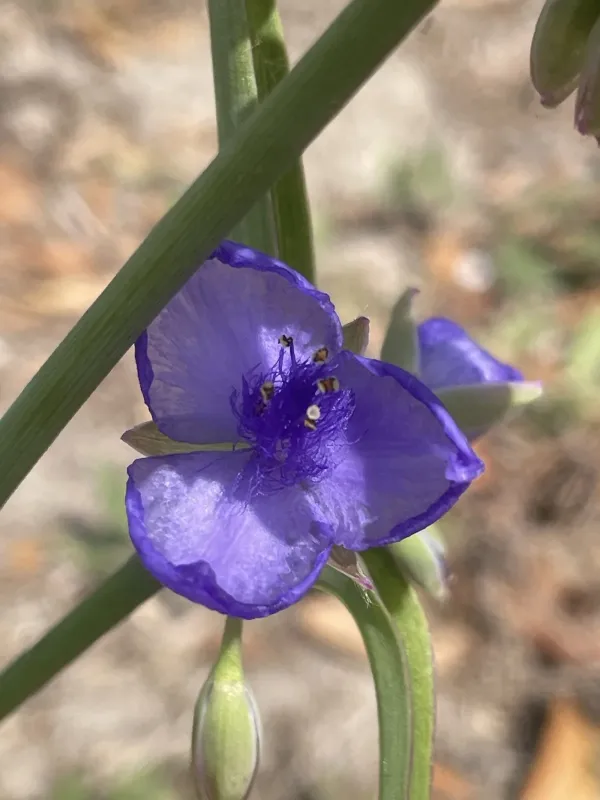
Tradescantia ohiensis, commonly known as Ohio spiderwort, belongs to the Commelinaceae family. This hardy herbaceous perennial is native to North America and is valued for its resilience.
Seeds should be sown in early spring or autumn. Cold stratification is often required for seeds to germinate successfully, ensuring a higher rate of seedling emergence.
Vegetative propagation via root division is the most common method in professional gardening. It should be performed early in the growing season to allow plants to establish.
When sowing, seeds should be lightly covered with soil, approximately 1 centimeter deep. Maintaining a moist seedbed is critical until germination occurs.
Plants should be spaced 40 to 50 centimeters apart. This spacing prevents overcrowding and encourages better airflow, which is essential for plant health.
Growing requirements
The crop thrives in full sun to partial shade. It requires rich, moisture-retentive soil but can adapt to a variety of soil types, provided they are not excessively dry.
Tradescantia ohiensis is highly adaptable to climate fluctuations and is fully hardy in most temperate zones, requiring no special winter protection.
Consistent watering is essential during dry spells. However, the soil must be well-drained, as the species is sensitive to waterlogging around the crown.
Regular fertilization with organic compost or balanced NPK fertilizers is recommended to maintain vigorous growth and abundant flowering.
Cultural maintenance involves cleaning the plant after the first frost by cutting back the foliage to the ground to encourage healthy new growth next spring.
Main diseases and pests
Slugs and snails are the primary pests of this plant, particularly in spring. They target fresh foliage and can cause significant damage to young shoots.
Powdery mildew may occur during hot, humid summers, manifesting as a whitish coating on leaves. It is often a result of poor air circulation.
Root rot occurs if the plant is grown in heavy, poorly draining clay soils that remain saturated for long periods.
Integrated pest management, including physical barriers for snails and appropriate spacing, is the best strategy for control.
Fungicidal treatments may be applied if powdery mildew spreads, though cultural controls like pruning are usually sufficient for small areas.