
Western spiderwort
Tradescantia occidentalis
Description
Growing requirements
Western spiderwort (Tradescantia occidentalis) is a perennial herbaceous plant belonging to the Commelinaceae family. It is native to the central parts of North America, where it thrives in prairie habitats and open, dry grasslands.
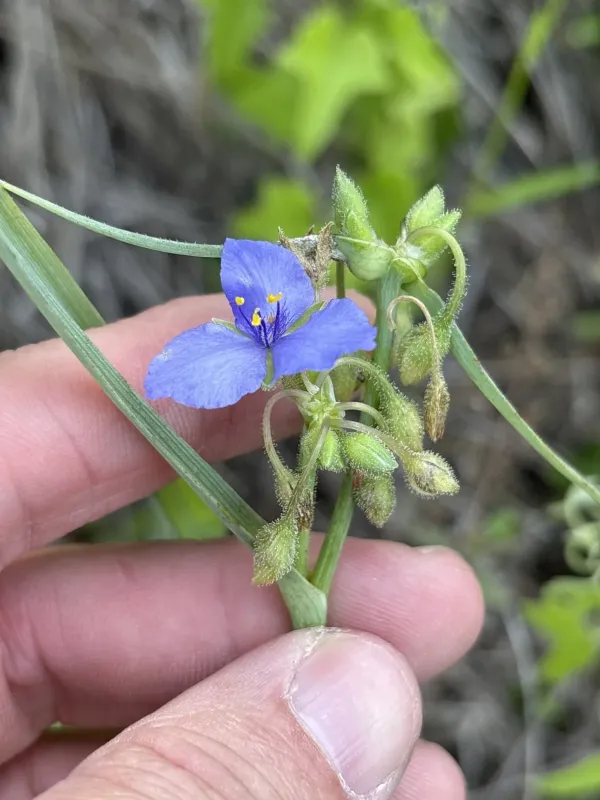
Botanically, the plant is distinguished by its upright, hairless to slightly hairy stems and narrow, grass-like leaves. Its most characteristic feature is the cluster of blue to purple flowers that bloom primarily in the morning, closing as the temperature rises throughout the day.
Regarding climatic requirements, Tradescantia occidentalis is highly adaptable to a range of environmental conditions. It excels in full sun but can tolerate partial shade, provided it receives sufficient light to sustain healthy stem development.
Soil requirements involve well-draining textures, such as sandy or loamy soils. The plant is drought-tolerant once established, thanks to its fleshy, tuberous roots that store water and nutrients, allowing it to survive harsh, dry summers.
Agricultural management is relatively simple compared to other perennial crops. Minimal maintenance is required, focusing mainly on soil aeration and ensuring that competing invasive species do not overshadow the crop during its early development stages.
Main diseases and pests
Fungal diseases, including powdery mildew, represent the primary threat to the health of Western spiderwort. These pathogens proliferate in dense plantings with poor air circulation, necessitating adequate spacing between individual plants.
Insect pests such as aphids can occasionally congregate on the tender buds and shoots, extracting sap and reducing the plant's aesthetic and physiological vigor. Regular scouting is recommended during the peak of the growing season.
Root rot is a significant concern in sites with poor drainage or excessive irrigation. This issue is usually fatal to the plant, so monitoring soil moisture levels is an essential part of the preventive care strategy.
Slugs and snails can cause mechanical damage to the foliage, particularly in early spring when the plant is just starting its vegetative cycle. Using protective barriers or eco-friendly deterrents can mitigate this risk effectively.
Proper sanitation at the end of the season, involving the removal of all dead foliage, is crucial to prevent the overwintering of pests and fungi, ensuring the long-term sustainability of the planting site.