
Bracted spiderwort
Tradescantia bracteata
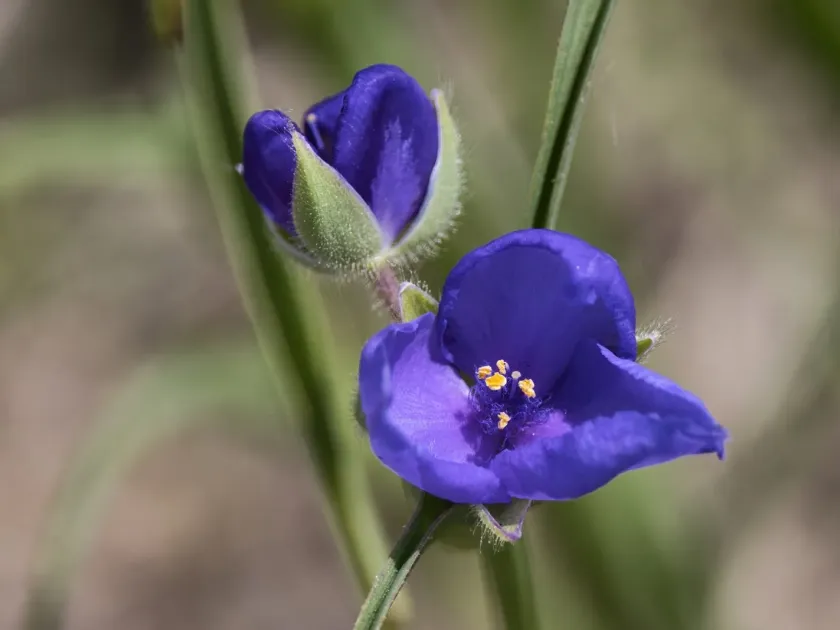
Description
Growing requirements
Tradescantia bracteata, commonly known as bracted spiderwort, is a herbaceous perennial belonging to the Commelinaceae family. Native to the central United States, it thrives in prairies and open fields, showcasing its adaptation to various light conditions.
The plant features clusters of violet-to-pink flowers and distinctive hairy, lanceolate leaves. It typically grows in compact clumps, making it an excellent choice for ground cover or perennial garden beds.
Regarding climate, this species is quite hardy and adapts well to temperate environments. It prefers full sun to partial shade, which ensures consistent blooming throughout the summer months.
Soil quality is a critical factor for success; the plant requires moist, well-draining soil rich in organic matter. While it is somewhat drought-tolerant, consistent moisture levels promote denser foliage and more vibrant flowers.
In terms of agricultural and horticultural use, it is a highly valued ornamental plant. Its low maintenance requirements and resilience to varying environmental stressors make it a staple in xeriscaping and native plant gardens.
Main diseases and pests
Spider mites are the most common pests affecting Tradescantia bracteata, especially during hot and dry spells. Regular inspection of the underside of leaves is necessary for early detection.
Root rot represents a significant threat to the plant's health, typically resulting from improper irrigation or poorly draining soil. Ensuring good soil structure is the best preventative measure.
Powdery mildew may occur if the plants are placed in areas with insufficient airflow. Thinning out overcrowded clusters helps to decrease humidity and stop fungal spread.
Slugs and snails can consume leaves during the early spring growth phase. Using organic mulches and slug barriers can protect young plants from significant damage.
Maintaining a balanced nutritional profile for the soil prevents plant stress, which in turn significantly lowers the susceptibility of the bracted spiderwort to common pests and pathogens.